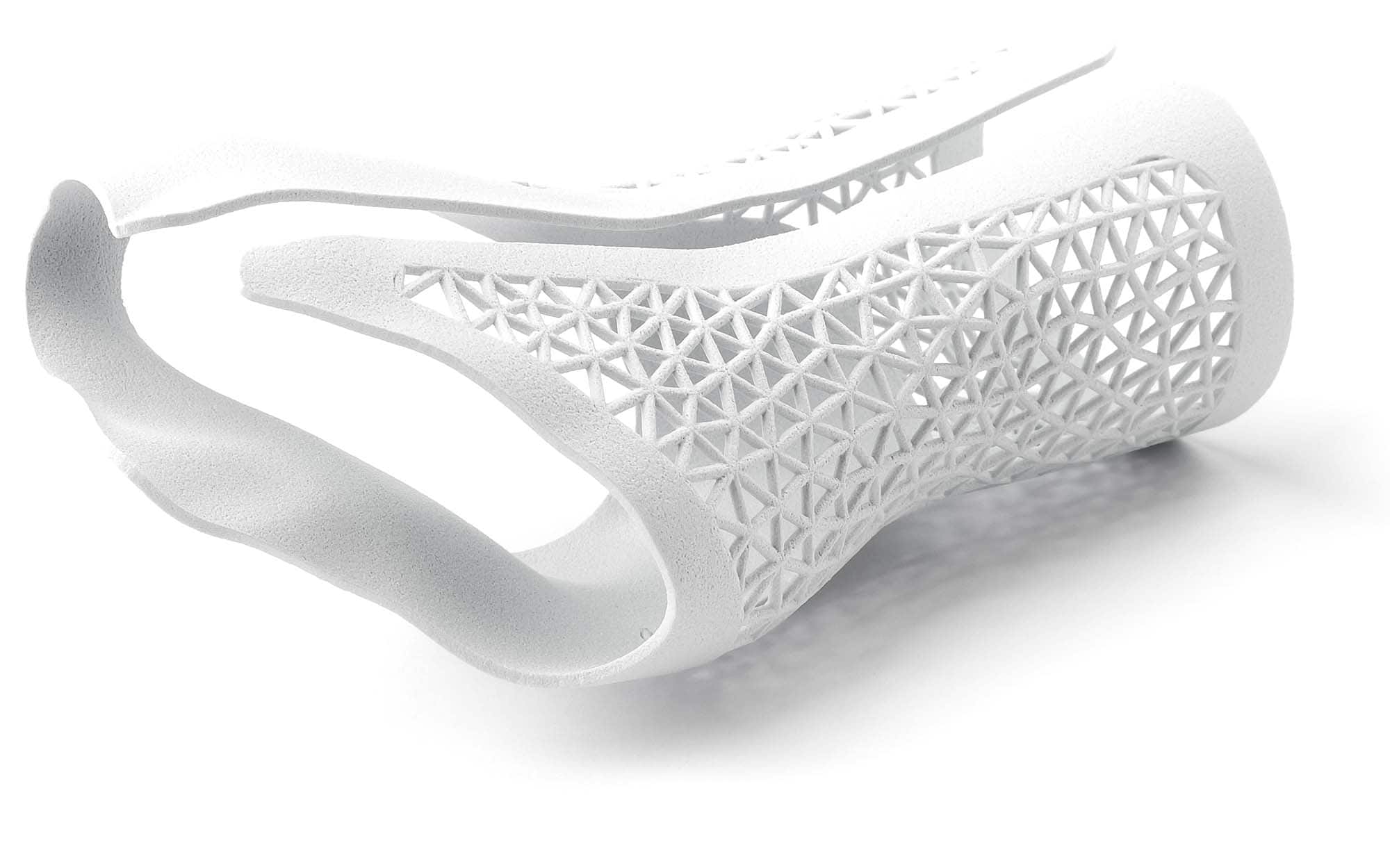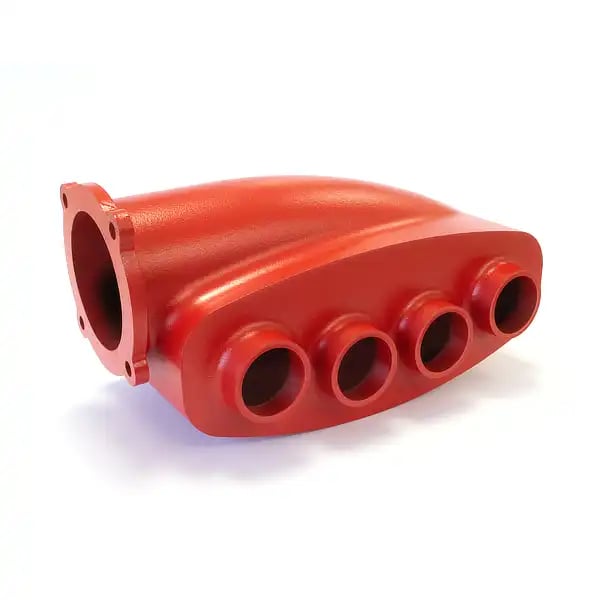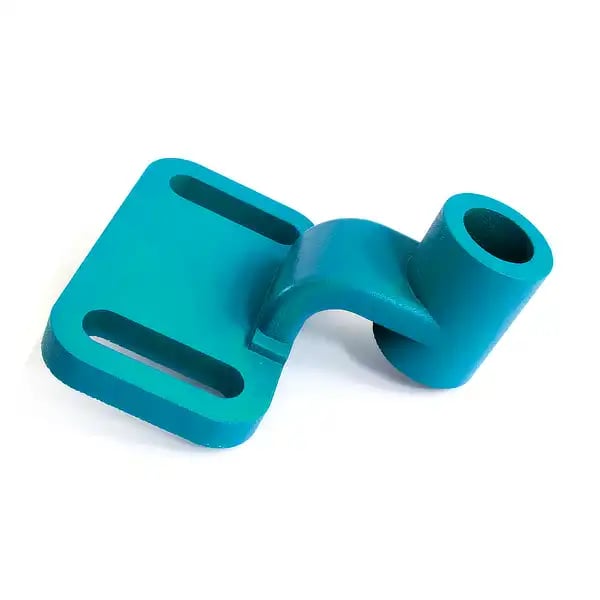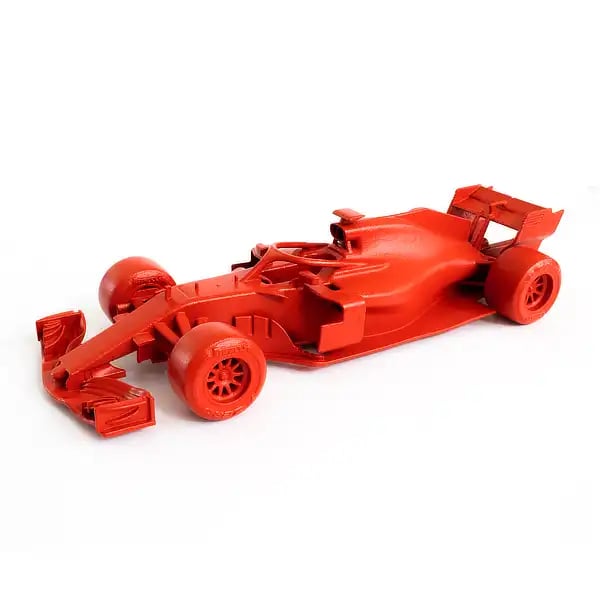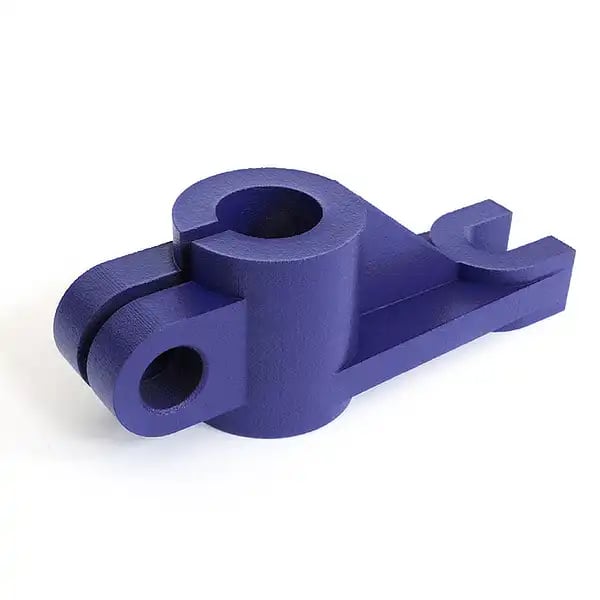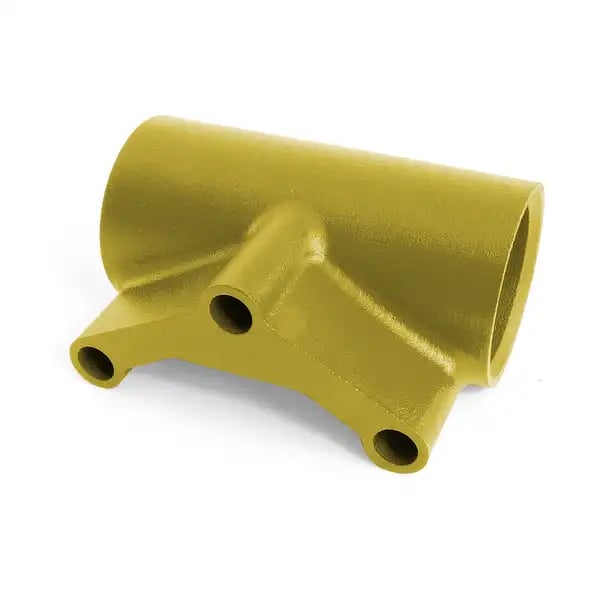
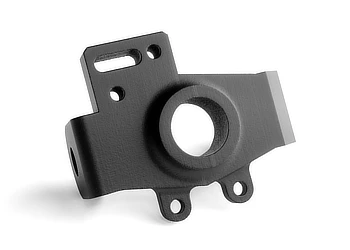
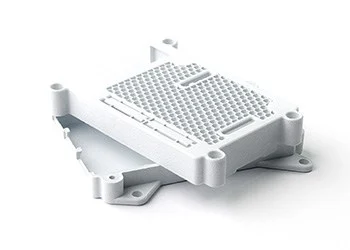
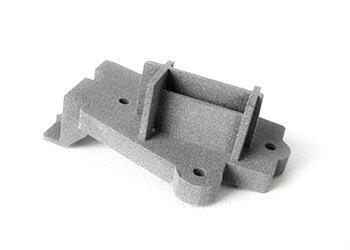
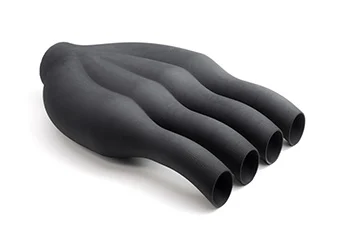
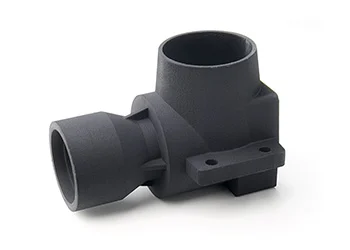
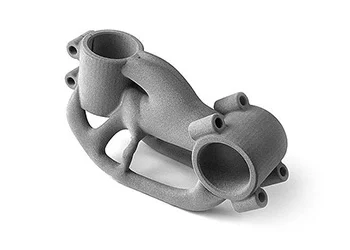
Nylon PA12 Flame Retardant (PA12 FR) is an advanced variant of polyamide 12 (PA12) specifically designed for industrial applications that require superior fire protection properties. It is a high-performance thermoplastic material that, through the uniform incorporation of special halogen-free flame retardant additives, offers homogeneous and effective protection against combustion. PA12 FR is certified to the international standard UL 94 V-0, which means it can rapidly stop the spread of fire in the event of a fire, ensuring the safety of structural and functional components. However, this certification applies to parts with thicknesses of 2.5 mm or more, making careful design essential to take full advantage of the material's fire retardant properties. In addition to its fire safety features, PA12 FR maintains excellent mechanical performance, with a tensile strength around 46 MPa and an elastic modulus of about 2540 MPa, characteristics that make it suitable for components that must withstand significant loads and stresses. An additional benefit of PA12 FR is its improved surface finish compared to conventional PA12, thanks to a roughness reduction of up to 50%, which allows for smoother, more finished components directly from the printer.
Flame Retardant Material
Nylon PA12 FR — MJF 3D Printing
PA12 Flame Retardant (FR) is a high-performance thermoplastic material specifically designed to meet the needs of industrial 3D printing through Multi Jet Fusion (MJF) technology. Derived from polyamide 12 (PA12), this advanced compound is enhanced with specialised flame-retardant additives, giving it excellent flame-retardant properties.
PROS
- Certified flame-retardant properties — Blue Card
- Excellent aesthetic finish
- Halogen - Free material
CONS
- V0 classification only for thicknesses greater than 2.5 mm
MAIN FEATURES
- 3D printing process: MJF
- Tolerances: ±0.50mm < 100mm ; ±0.5% > 100mm
- Max. size: 380 x 284 x 380 mm ; 15 x 11.2 x 15 in
- Lead time: <4 days
3D PRINTED FLAME RETARDANT NYLON VIDEO
Flame retardant properties
Thanks to the presence of specially designed and uniformly distributed flame retardant particles within the Nylon PA12 powders, the PA12 FR material provides excellent flame resistance that is homogeneous over the entire surface and volume of the molded part. This uniform distribution ensures that the flame retardant properties are not confined to specific areas, but instead are consistent and reliable across the entire part, significantly improving safety and performance under conditions of heat or fire exposure.
Excellent aesthetic finish
Thanks to its new formulation and advanced manufacturing processes, PA12 FR has a significantly improved surface roughness compared to classic PA12. This characteristic gives molded components a smoother and more uniform surface finish, providing superior aesthetic results and better perceived quality of the final product.
Halogen-Free Material
The flame-retardant particles used in PA12 FR are developed with advanced technologies to ensure high flame-extinguishing effectiveness, helping to slow the spread of fire. These compounds are formulated to prevent the release of halogens during combustion, thus avoiding the emission of toxic substances that are potentially harmful to human health and the environment. Because of these characteristics, Nylon PA12 FR provides safer and more sustainable fire protection in line with the latest safety and environmental regulations.
HOW MUCH DOES IT COST TO PRODUCE YOUR PARTS IN PA12 FR?
free instant quoteHP PA12 FR
What is PA12 FR flame retardant material?
The PA12 FR flame retardant material, also known as Nylon PA12 Flame Retardant, represents a significant technological advancement in materials for industrial 3D printing. Based on standard polyamide 12, PA12 FR has been specifically formulated to incorporate flame-retardant properties without compromising the mechanical characteristics that have made PA12 one of the most valued thermoplastics in the additive manufacturing sector.
This flame retardant nylon is particularly suited to contexts where fire safety is paramount: aerospace, transport, electronics, and rail. Its advanced formulation includes halogen-free flame-retardant additives, which do not release toxic substances during combustion, meeting the requirements of increasingly stringent environmental safety regulations.
One of the distinctive characteristics of flame retardant nylon PA12 is its ability to meet the UL 94 V-0 classification — the international standard that certifies the combustion resistance of plastic materials — from a minimum thickness of 2.5 mm. PA12 FR also boasts a smoother surface finish compared to standard PA12, making parts not only functional but aesthetically superior.
Advantages of Nylon PA12 Flame Retardant
UL94 V-0 certified flame resistance
Flame resistance is guaranteed by uniformly distributed additives throughout the powder that makes up the flame retardant material. This homogeneous distribution ensures that every part of the printed component maintains the same fire-retardant properties, eliminating weak spots. PA12 FR not only retards combustion but prevents the propagation of fire through the material, offering effective and certified protection in fire conditions.
Mechanical properties of PA12 Flame Retardant
From a mechanical standpoint, flame retardant nylon maintains excellent performance: tensile strength of 46 MPa, elastic modulus above 2,500 MPa, and elongation at break of approximately 4%. These values indicate a robust material, capable of withstanding stress and dynamic loads or vibrations. The heat deflection temperature under load (HDT at 0.45 MPa) reaches 172 °C, ensuring dimensional stability even in thermally variable environments.
Compatibility with HP Multi Jet Fusion technology
PA12 FR is fully compatible with HP's Multi Jet Fusion (MJF) technology, which allows parts to be produced with high dimensional accuracy and fine details without sacrificing production speed. MJF technology guarantees a uniform surface finish, reducing the need for post-processing: a decisive advantage in high-volume industrial applications.
Disadvantages
Despite its many advantages, FR nylon has some limitations to consider during the design phase.
The most significant constraint concerns the minimum thickness of 2.5 mm required to achieve UL 94 V-0 certification. Components with very thin walls may not guarantee the same effectiveness in flame resistance, limiting the design of lightweight or extremely thin parts.
In addition, the cost of flame retardant nylon is generally higher than standard PA12, due to the retardant additives and the more controlled production processes required to maintain uniformity and quality. This can be a factor in applications where fire-retardant requirements are not a priority or the budget is limited.
Applications of Nylon 12 Flame retardant
PA12 FR flame retardant material is ideal for applications requiring a balance between mechanical performance, fire safety, and aesthetic quality.
Aerospace: internal components and structural supports that must meet stringent safety standards without adding unnecessary weight to the aircraft.
Automotive and transport: electronic housings, interior panels, and structural supports where flame resistance and mechanical robustness are fundamental requirements.
Electronics: insulating enclosures, printed circuit board supports, and components where the fire safety of flame retardant nylon is essential.
Rail: components that must meet stringent regulations such as EN 45545, the European standard for fire safety in rolling stock.
Medical and industrial: parts requiring precision, mechanical strength, and a high level of protection against fire risk.
Comparison of Flame Retardant Materials: PA12 FR, ABS FR and PEEK
PA12 FR vs Standard PA12
Flame retardant PA12 differs from standard PA12 in the presence of fire-retardant additives. Standard PA12 is a versatile and widely used material in 3D printing, but offers no fire protection, limiting its use where fire safety is a mandatory regulatory requirement.
PA12 FR vs Flame Retardant Resins
Compared to flame retardant resins available for 3D printing, FR nylon PA12 offers better mechanical strength and greater durability. FR resins are more brittle and less suited to components subject to high mechanical loads. Furthermore, PA12 FR produced with MJF technology guarantees significantly shorter production times compared to resin-based processes.
PA12 FR vs ABS FR and PEEK
Compared to flame retardant ABS, PA12 FR offers superior mechanical properties and a considerably more refined surface finish. Compared to PEEK — a material that excels in extreme thermal and mechanical resistance — flame retardant nylon PA12 is positioned in a far more accessible cost and processability range, making it the optimal choice for most regulated industrial applications.
Why Choose PA12 FR for Industrial 3D Printing
Nylon PA12 Flame Retardant represents the ideal solution for those seeking a high-performance, safe, and versatile flame retardant material for industrial 3D printing. Its ability to combine excellent mechanical properties with a recognised UL 94 V-0 fire certification — together with an improved surface finish — places it at the top of the range of additive materials for critical applications.
The possibility of producing it with HP Multi Jet Fusion technology allows complex, precise, end-use-ready components to be obtained in fewer than 3 working days, from 1 to 10,000 parts, significantly expanding the design and production opportunities for modern companies.
UL94 V-0 Certification: what is the PA12 Flame Retardant UL Blue Card?
Card is the official document issued by UL (Underwriters Laboratories) certifying the flammability classification of a plastic material according to the UL 94 standard. It is effectively the equivalent of the better-known UL Yellow Card — the standard reference for conventional plastic materials — but dedicated to materials for 3D printing: an important distinction, as it certifies the fire behaviour of the finished printed part and not just the raw powder material alone.
For HP's PA12 FR flame retardant material, the Blue Card certifies the flammability classifications at three different thicknesses:
-
1 mm → HB classification (horizontal self-extinguishing, base class)
-
1.8 mm → V-2 classification (vertical self-extinguishing, dripping permitted)
-
2.5 mm → V-0 classification (vertical self-extinguishing, maximum classification, no dripping)
This means that flame retardant nylon PA12 FR is not a material with a single safety threshold, but offers certified coverage across a wide range of thicknesses: even components with 1.8 mm walls achieve a recognised UL94 classification, albeit at V-2 level rather than V-0.
The UL94 V-0 classification at 2.5 mm remains the most stringent reference: it guarantees that flame retardant nylon self-extinguishes within 10 seconds of flame removal, with no dripping of burning material. The availability of the Blue Card makes PA12 FR directly usable in regulated sectors such as electronics, aerospace, and rail, where certified documentation is a contractual requirement — and not merely a recommendation.
Properties of NYLON PA12 FR
| Tensile breaking load | 46 MPa |
| Elastic modulus | 2540 MPa |
| Elongation at break | 4% |
| Flexural modulus | 1730 MPa |
| HDT 0.45 MPa | 175°C |
| Izod impact resistance | 3.5k J/m² |
Flame resistance properties
| Thickness | Orientation | Value | Unit | Method |
| 1 mm | XYZ | HB | Passed | UL 94 (Blue Card) |
| 1,8 mm | XYZ | V2 | Passed | UL 94 (Blue Card) |
| 2,5 mm | XYZ | V0 | Passed | UL 94 (Blue Card) |
Questions and answers about fire retardant nylon
Compared with flame retardant resin used in stereolithography technologies, PA12 Flame Retardant has significant advantages in terms of strength and mechanical resistance, making it more suitable for functional and structural components that must withstand significant mechanical stresses. Flame retardant resin offers superior aesthetic quality and fine details, but tends to be more brittle and less impact resistant than PA12 FR. In addition, the Multi Jet Fusion manufacturing process used with PA12 FR allows faster production times and greater flexibility in the fabrication of complex, medium- to thick-walled components. The choice between PA12 FR and flame retardant resin will therefore depend on the specific application: for structural and robust parts, PA12 FR is preferable; while for small components with high aesthetic and detailed resolution, resin may be more suitable.
From an aesthetic standpoint, PA12 Flame Retardant offers a significantly improved surface finish compared to standard Nylon PA12. Thanks to an optimised formulation and advanced manufacturing processes, PA12 FR achieves a surface that is up to 50% smoother and more uniform than standard PA12, significantly reducing the need for post-processing and offering ready-to-use components with a more pleasing and professional appearance. Mechanically, PA12 FR retains much of the performance of standard PA12 although it generally exhibits lower ductility and slightly lower elongation at break. Its mechanical properties include a tensile strength around 46 MPa and an elastic modulus of about 2540 MPa, which are comparable to those of standard PA12. The real difference, however, lies in its flame-retardant properties: standard PA12 lacks fire-retardant properties, whereas PA12 FR is specifically designed for fire safety-critical applications, boasting UL 94 V-0 certification.
The main applications of Nylon PA12 Flame Retardant are mainly in industries that require high standards of fire safety, mechanical strength and good aesthetic quality. In the aerospace sector, PA12 FR is used to produce aircraft interior and exterior components, such as cladding panels, structural supports, and electronic enclosures, due to its ability to rapidly block the spread of flames and provide strength even under extreme conditions. In the automotive and railway industries, it is employed in the production of interior safety components, insulating enclosures for electrical equipment and structural components, which must comply with stringent international fire regulations, such as EN 45545 for railway applications. In the electronics and electrical engineering field, PA12 FR is widely used to make protective enclosures, printed circuit board housings, connectors and insulators, offering an ideal combination of fire safety, mechanical strength and dimensional stability over time. In addition, PA12 FR can also be chosen for medical equipment, advanced industrial devices, and technical equipment, where its fire-retardant properties, good surface finish, and ability to withstand high mechanical loads make it particularly advantageous, ultimately enhancing the reliability and lifespan of the final components.
Yes: the PA12 FR used is completely free of halogens (chlorine, bromine). Flame retardancy is achieved through halogen-free agents, ensuring full RoHS and REACH compliance, which is essential for electronic applications and environments occupied by people.
QUOTE IN 1 SECOND AND WITHOUT OBLIGATION
HOW MUCH DOES IT COST TO MAKE YOUR PIECES?
Upload your 3D file now and find out immediately
instant quote