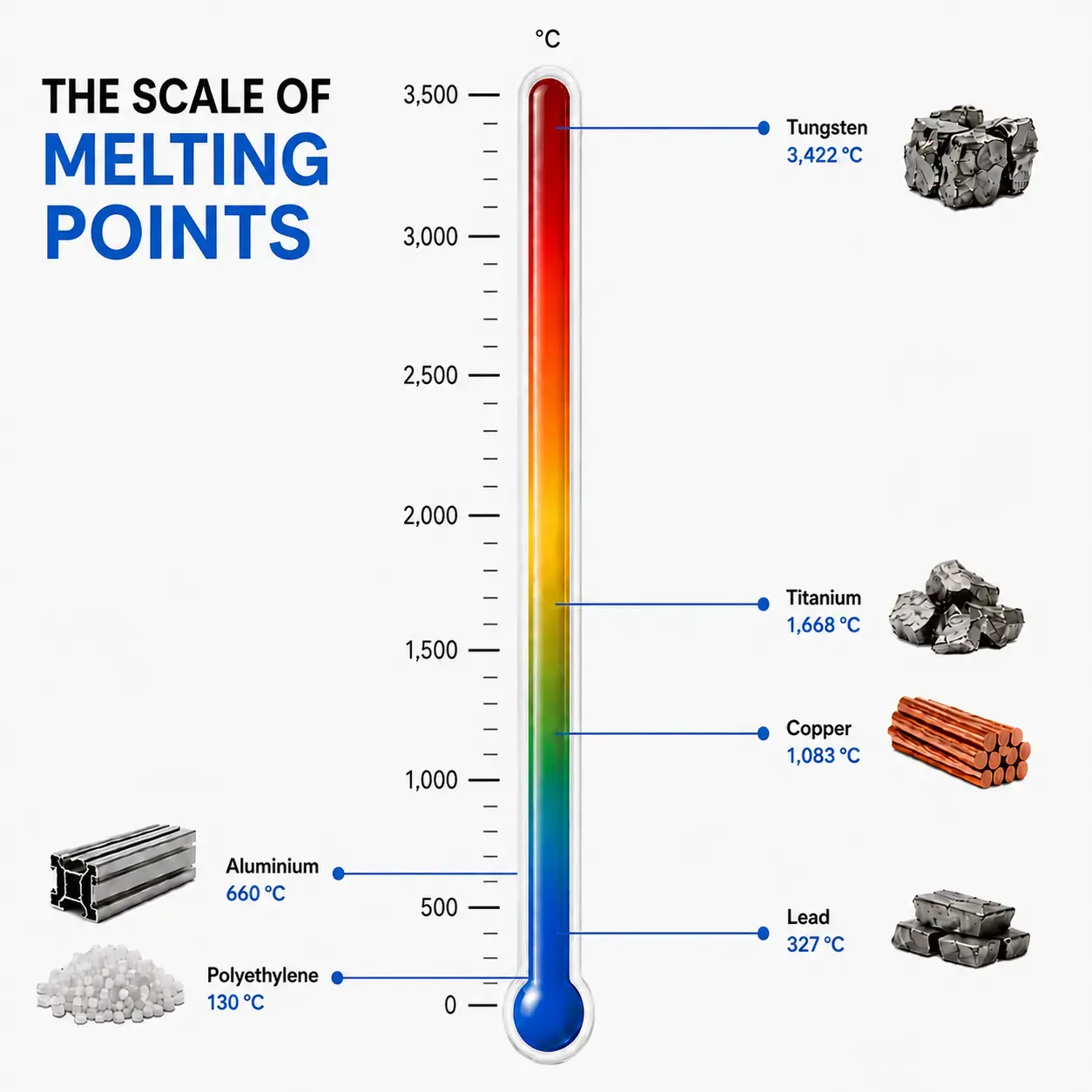
Tensile strength is one of the most important mechanical properties in industrial design and material selection. It indicates the ability of a material to withstand forces that tend to elongate or fracture it.
In this 2026 guide, we shall examine everything worth knowing about tensile strength: from the definition and units of measurement, to the formula and test methods, through to the principal factors that influence it and the strategies for improving it.
What is Tensile Strength
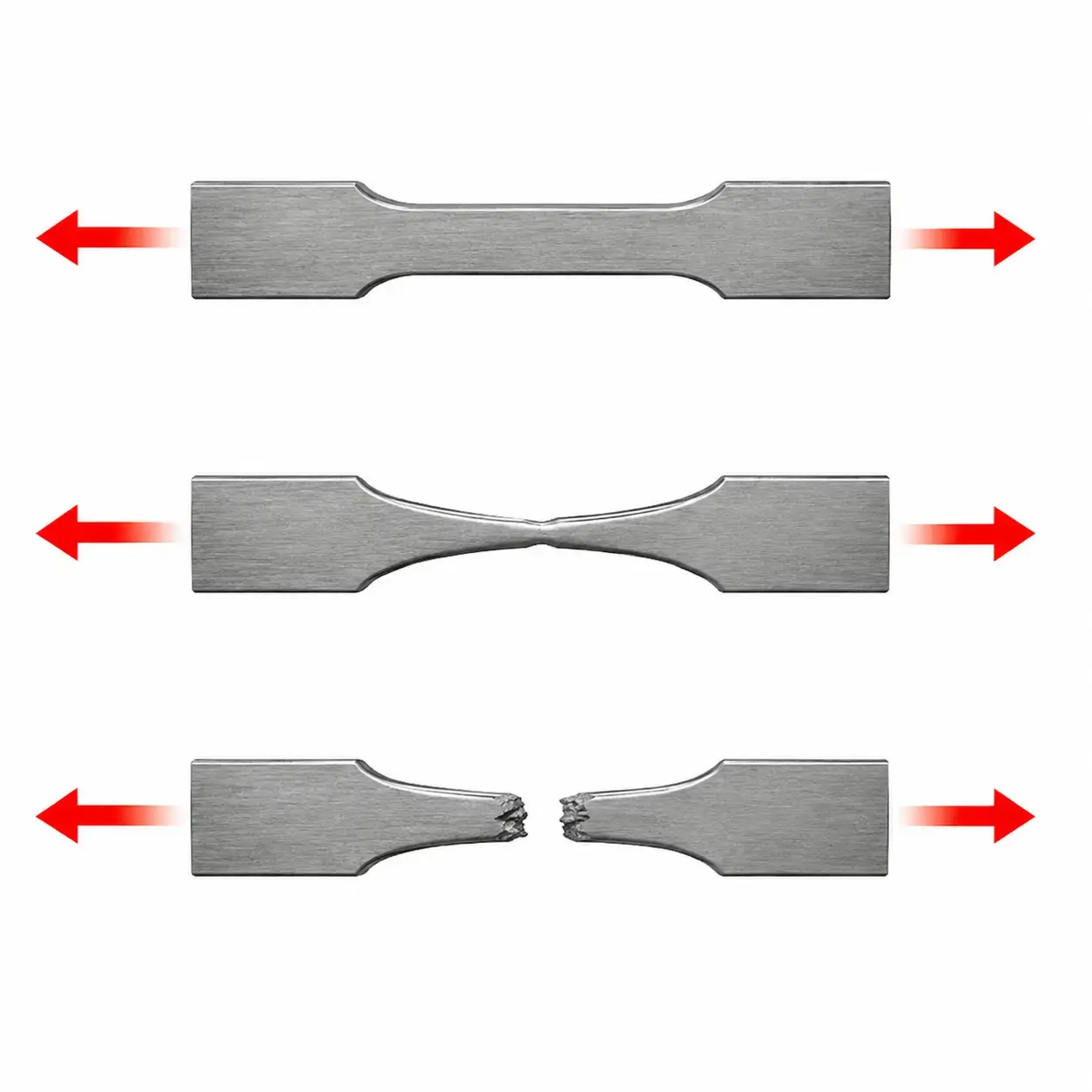
Tensile strength is the maximum stress that a material can withstand before fracturing when subjected to a tensile force, that is, a force that tends to elongate it along an axis.
In practical terms: it measures how much resistance a material can offer before failure.
It is typically expressed in megapascals (MPa).
Tensile strength formula
Tensile stress is calculated as follows:
σ = F / A
Where:
The ultimate tensile strength corresponds to the highest point reached on the stress–strain curve prior to fracture.
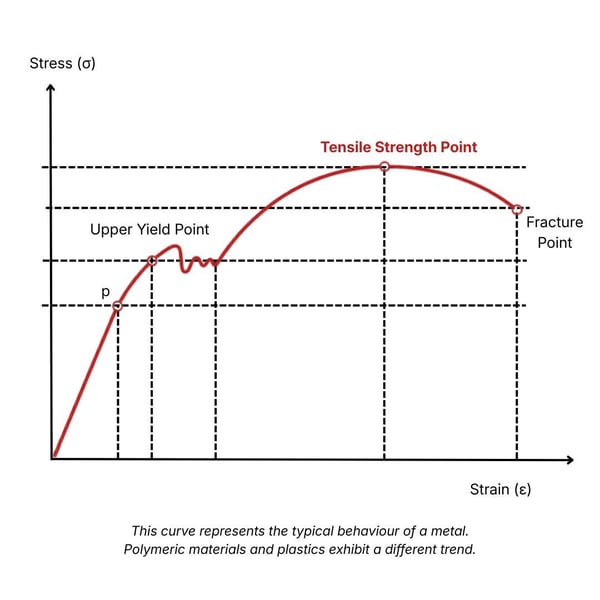
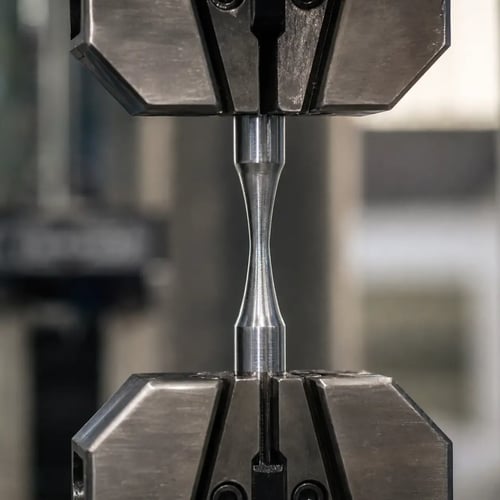
HOW IT IS MEASURED: THE TENSILE TEST
The standard method for measuring tensile strength is the tensile test, governed by international standards such as:
- ISO 6892-1 for metals
- ASTM E8/E8M (American standard)
- EN 10002 for steels and metallic products
- ASTM D638 for plastics
Factors influencing tensile strength
Chemical Composition of the Material
In steels, the addition of alloying elements such as carbon, manganese, chromium, and nickel increases tensile strength.
Temperature
As temperature rises, the tensile strength of metals tends to decrease. For this reason, components operating at elevated temperatures (such as turbines, furnaces, and engines) employ purpose-designed superalloys.
Defects and Porosity
Inclusions, porosity, and surface defects act as stress concentrators and reduce the effective strength of the actual component relative to the theoretical value of the material.
Heat Treatment
Processes such as quenching, tempering, and annealing profoundly alter the microstructure of a material and, consequently, its mechanical properties. Correct quenching can raise the tensile strength of a steel from 500 MPa to in excess of 1,500 MPa.
Manufacturing process
Casting, CNC machining, and additive manufacturing all influence microstructure. Cold working induces residual stresses and modifies the grain structure, generally increasing tensile strength whilst reducing ductility.
Typical Tensile Strength Values for key Materials
|
Material
|
Tensile Strength (MPa)
|
|
Pure aluminum (1050)
|
75-115 MPa
|
|
Aluminum Alloy 6061-T6
|
290-310 MPa
|
|
Mild steel (S235)
|
360-510 MPa
|
|
Stainless steel 304
|
515-820 MPa
|
|
Tool steel (H13)
|
1,000-1,400 MPa
|
|
Titanium (Ti-6Al-4V)
|
895-1,000 MPa
|
|
Carbon fibre (CFRP)
|
600-3,500 MPa
|
|
Nylon 66
|
70-85 MPa
|
|
Concrete (compressive)
|
20-50 MPa
|
Concrete has very low tensile strength (approximately 1/10 of its compressive strength), which is why it is always reinforced with steel in structural applications.
How to Improve the Tensile Strength of a Component
If you are designing a component and need to increase its tensile strength, the following strategies are the most effective:
- Select a higher-strength alloy: transition from mild steel to an alloy steel.
- Apply heat treatment: quenching and tempering significantly increase strength.
- Optimise the geometry: eliminating sharp corners and stress concentrators reduces local stress peaks.
- Improve manufacturing quality: reducing surface defects and porosity brings the effective strength of the actual component closer to the theoretical value.
- Use composite materials: in weight-critical applications, carbon fibre or glass fibre composites offer very high tensile strength at low density.
Why tensile strength is important
- Structural safety: prevents failure and fracture.
- Correct material selection: enables comparison between different materials.
- Weight optimisation: high-strength materials allow lighter components.
- Durability: greater strength leads to greater reliability.
Conclusion
Tensile strength is one of the fundamental parameters for assessing the mechanical behaviour of a material.
Understanding it enables engineers to select the correct material, prevent fractures, design more efficient components, and optimise both safety and performance. Whether working with metals, polymers, composites, or additive manufacturing, tensile strength remains one of the primary reference parameters in materials engineering.
Do you need to select the most suitable material based on mechanical performance?
UPLOAD YOUR FILE AND RECEIVE TECHNICAL SUPPORT FOR MATERIAL SELECTION
Frequently asked questions about tensile strength


 Weerg staff: Aug 26, 2026