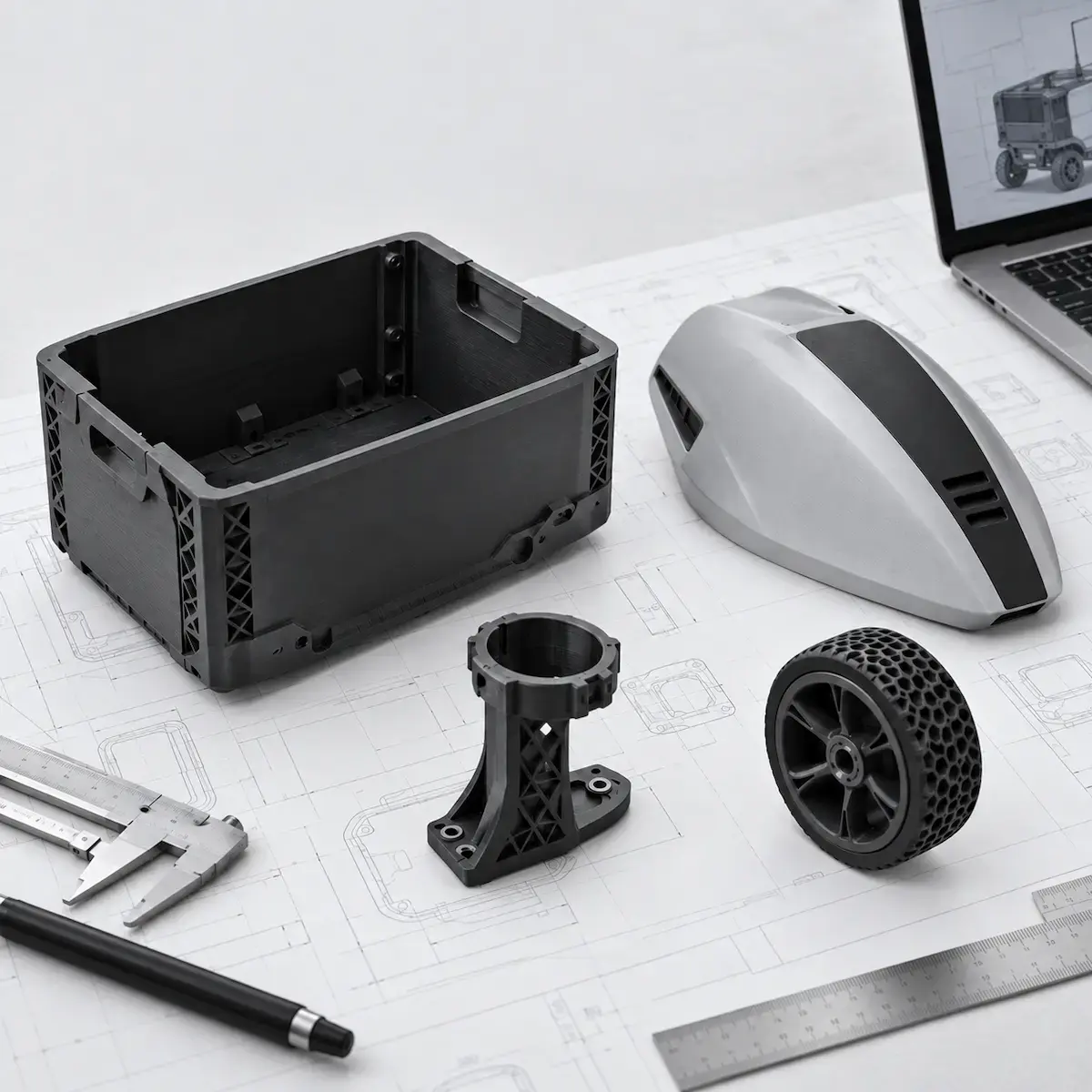
The Titawin collaboration from our side: PA12 GB (glass beads), millimetric geometries, and CAD files already production-ready.
|
21 mm
FlyLight central mullion
|
59 mm
Total wall footprint |
< 5 days
standard lead time, PA12 GB (glass beads) |
The client: Titawin
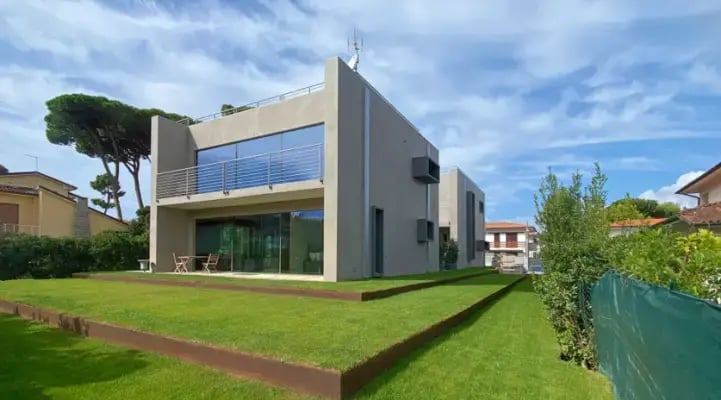
Titawin is based in Lugano and Turin. It designs and produces high-tech window and door systems for the premium residential segment, with one stated goal: make the window disappear from the perception of whoever lives in the house.
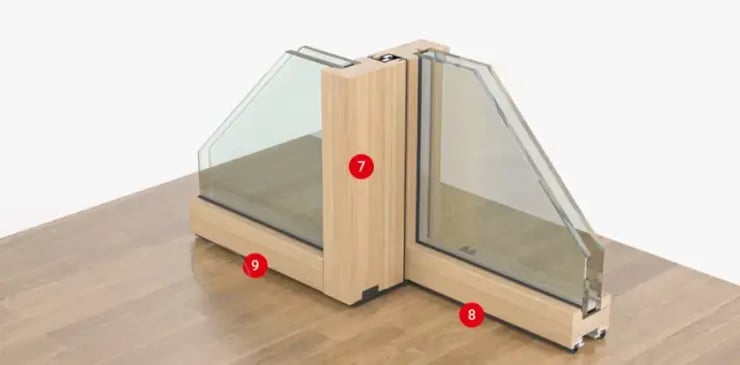
Its flagship product is called FlyLight, a lift-and-slide unit with a 21 mm central mullion and a total wall footprint of just 59 mm, frame included. In its category, nothing slimmer exists today.
The challenge: the less you see, the more complex it gets
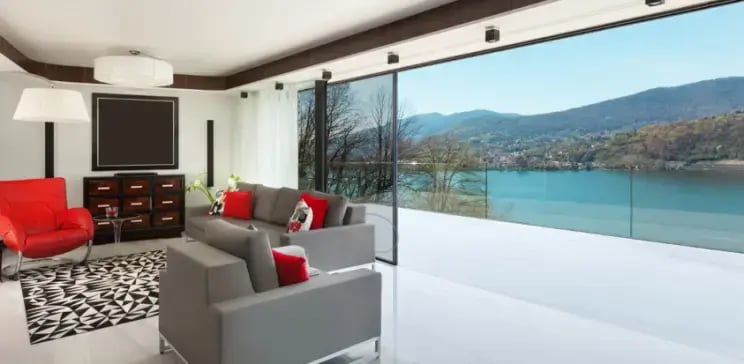
The idea behind FlyLight is as easy to communicate as it is hard to engineer: remove everything that visually separates inside from outside. No floor sill, no exposed tracks, no mullions eating into the daylight opening.
But the complexity doesn't disappear, it just gets hidden. In FlyLight it sits inside the profile itself. The sliding carriages are placed at the top, in the most protected zone of the system. The security pins emerge from the floor only as the sash passes over them. The motor, in the automatic version, is integrated into the profile and costs the same as the manual version.
For whoever buys it, the user experience is clean. For whoever designs the internal components, it's an exercise in constrained geometry: everything has to fit inside 21 mm of mullion, take continuous loads and survive outdoor service for decades.
Why PA12 GB (glass beads)
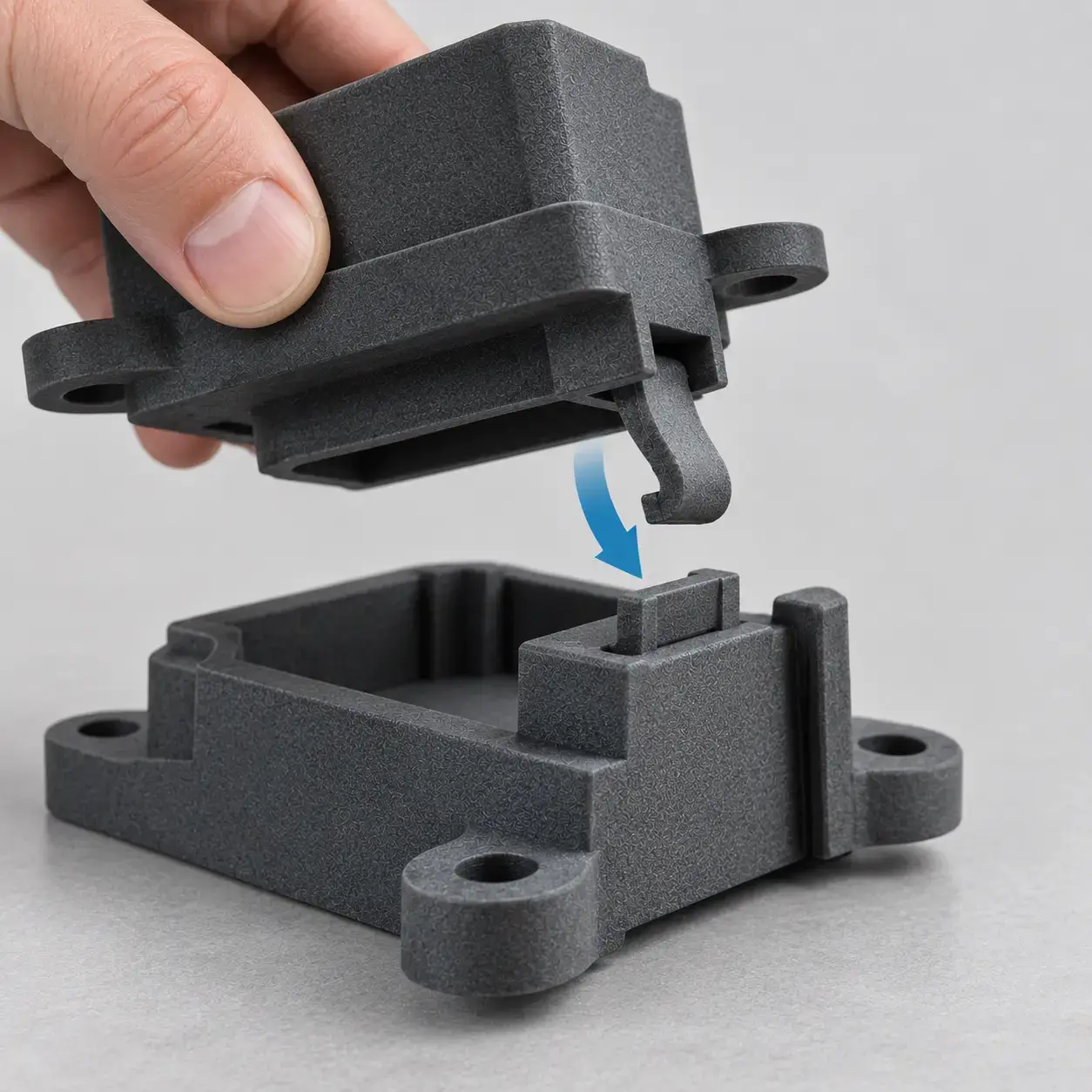
The components we make for Titawin are printed in PA12 GB on Multi Jet Fusion.
It's not the cheapest choice. Standard PA12 would cost less and is more ductile. But this application needs other properties.
First, stiffness: PA12 GB is significantly stiffer than standard PA12, which translates into components that hold their geometry under continuous load without losing fit tolerance over time. In a mechanism meant to operate for decades, dimensional drift is not acceptable.
Then thermal stability: a window unit lives outdoors, exposed to wide thermal swings. PA12 GB handles them without trouble. Same goes for UV resistance and wear from repeated opening and closing cycles over the years.
The material costs more, but it's the right one for this application.
The hidden factor: the quality of the design input
The speed we deliver to Titawin doesn't come only from our machines. The machines are fast, our standard under 5 days is real and we hold it. But that's half the result.
The other half is built by the client before they even open the quoting portal.
The files coming in from Titawin are never 'print it and let's see'. They're designed for MJF: print orientation already optimised, wall thicknesses calibrated on our production minimums, geometries built to avoid the typical pitfalls of the technology. The engineers at Titawin know the constraints and build them into the CAD.
The practical outcome: iterations close to zero, the first batch is the production batch. No week-long rework cycles.
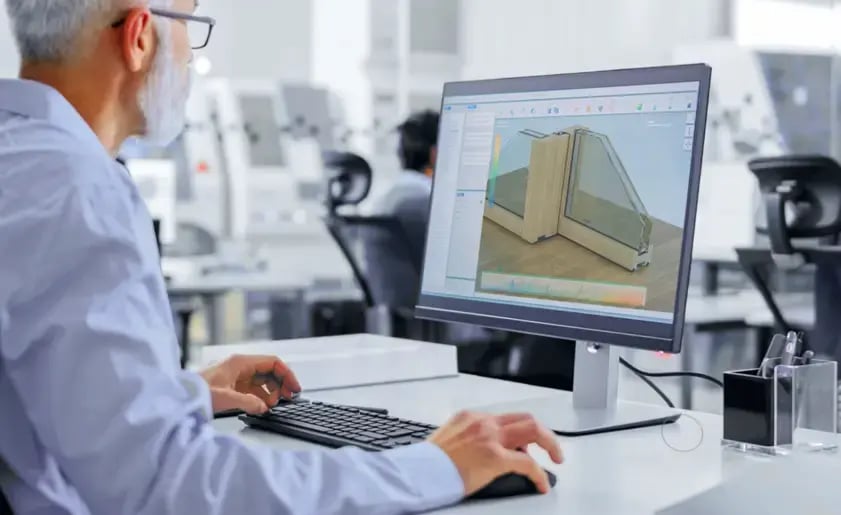
Everyone talks about production lead time. Few talk about total lead time. When there are three iteration cycles in between, the difference is measured in weeks.
What 'top client' actually means in operations
For Weerg, 'top client' is not a sales label. It's the precise description of a partnership with continuous volumes, stable specs, and a product horizon measured in years, not prototypes.
Titawin fits this definition. That lets us plan capacity in a reliable way and guarantee a service level that, with an occasional customer, we couldn't sustain with the same consistency.
The advantage runs both ways: Titawin works with a supplier that knows their specs and knows what to expect from every order. We work with a client who doesn't make us chase the information.
One detail that tells you everything
Every order arrives as a complete sheet: reference file, quantities, any changes from the previous version, material, finish. Zero chasing. Zero clarification questions. Anyone who runs a service bureau knows how rarely that happens.
Behind a design where everything has to disappear from sight, there are components that have to do their job in silence. The less obvious part is that there are also people, on the other side of the relationship, who do their job well enough to make ours easier.
Delivery speed doesn't live only in the machines. It lives in the whole chain, from whoever draws the file to whoever ships the part.
Learn more
Want to print components in PA12 GB (glass beads) with the same approach?
Upload your file on weerg.com and get an instant quote
Want to see the world's slimmest lift-and-slide door system? Visit Titawin and explore the FlyLight project.
Read more on the material: PA 12 Glass Beads


 Weerg staff: Sep 30, 2026