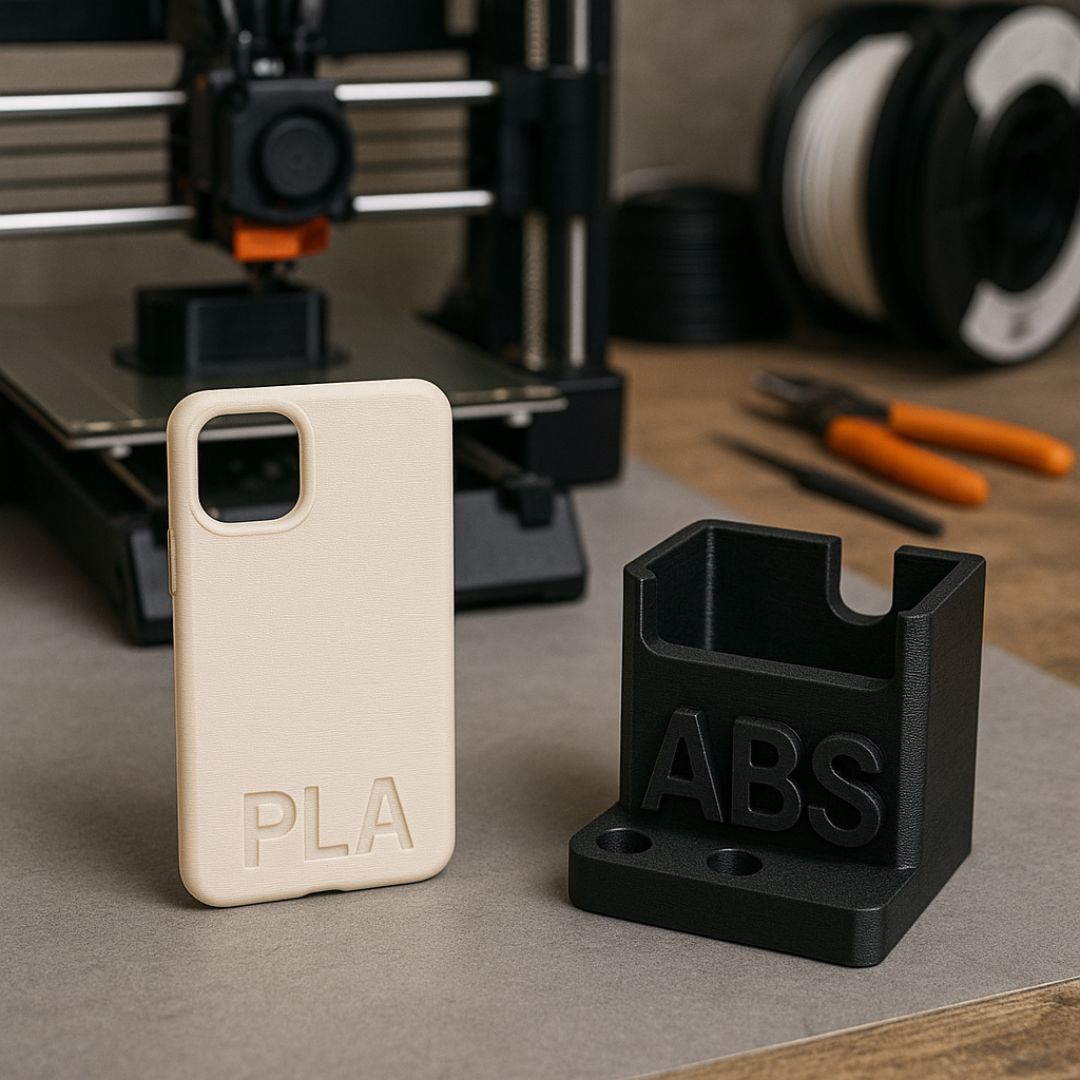
In the world of FDM (Fused Deposition Modelling) 3D printing, material selection is a key factor in determining the quality, functionality, and longevity of the final part. Among the most widely used materials are PLA (Polylactic Acid) and ABS (Acrylonitrile Butadiene Styrene).
While PLA is often regarded as the easiest option for rapid prototyping and home use, ABS remains the benchmark material for technical, industrial, and mechanical applications thanks to its strength, thermal stability, and long-term durability.
This article explores the main differences between the two polymers.
What are PLA and ABS?
What is PLA (Polylactic Acid)?
PLA is a biopolymer derived from natural resources such as corn starch or sugarcane. It is biodegradable, easy to print, and ideal for aesthetic models and conceptual prototypes.
Advantages of PLA:
Limitations:
What is ABS (Acrylonitrile Butadiene Styrene)?
ABS is a petroleum-based engineering copolymer composed of three monomers: acrylonitrile, butadiene, and styrene. This combination provides an excellent balance of rigidity, toughness, and impact resistance.
Advantages of ABS:
-
Outstanding mechanical and thermal resistance
-
High durability and dimensional stability
-
Suitable for chemical post-processing (e.g., acetone smoothing)
-
Ideal for functional components and stress-bearing parts
Limitations:
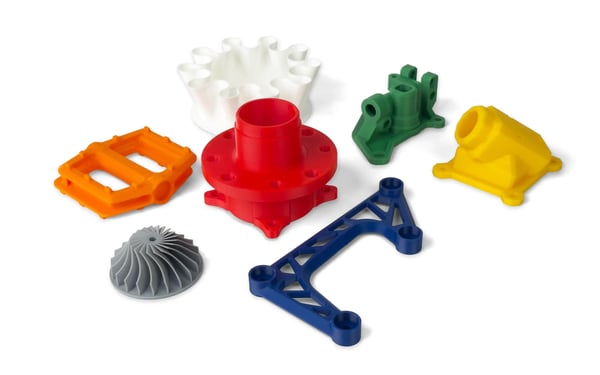
How to Print ABS and PLA?
3D Printed PLA Filament
PLA prints easily at temperatures between 190–220 °C and requires no special setup. It can be used on open-frame printers and unheated beds. However, its inherent brittleness and poor heat resistance limit its use in functional applications.
3D Printed ABS Filament
ABS prints at 230–260 °C, with a heated bed (90–110 °C) and preferably within an enclosed chamber to reduce thermal deformation (warping).
Under these conditions, the result is parts with excellent layer adhesion, strong mechanical integrity, and high stability.
When to use PLA vs ABS?
|
Use Case
|
Recommended material
|
Reason
|
|
Aesthetic prototyping or concept design
|
PLA
|
Easy to print with a good surface finish
|
|
Functional or mechanical components
|
ABS
|
Greater strength and long-term durability
|
|
High-temperature environments (>60 °C)
|
ABS
|
Superior thermal stability
|
|
Educational or hobby use
|
PLA
|
Non-toxic, simple and clean to work with
|
|
Industrial, automotive, or electronic parts
|
ABS
|
Excellent mechanical, thermal and chemical resistance
|
In summary, PLA is the ideal choice for visual prototypes, while ABS stands out as the technical solution for engineering applications.
Technical Conclusions
The comparison between PLA and ABS highlights two complementary approaches to 3D printing:
-
PLA excels in ease of use and aesthetic results but remains limited in technical performance.
-
ABS, while requiring more controlled printing conditions, provides substantial advantages in strength, thermal stability, and durability—making it the go-to material for professional applications.
In conclusion, ABS is not merely an alternative to PLA—it is a strategic choice for those seeking real performance, suited to engineered prototypes, finished products, and demanding operational environments.
Upload your file now and get an instant quote for your ABS parts

 Weerg staff: Oct 14, 2026