In the world of industrial production and CNC machining, choosing the right material is a crucial step in achieving quality, precision and long-lasting performance.
Among the most in-demand materials are PVC and aluminium, both versatile and widely used, but fundamentally different in terms of properties, strength and field of application.
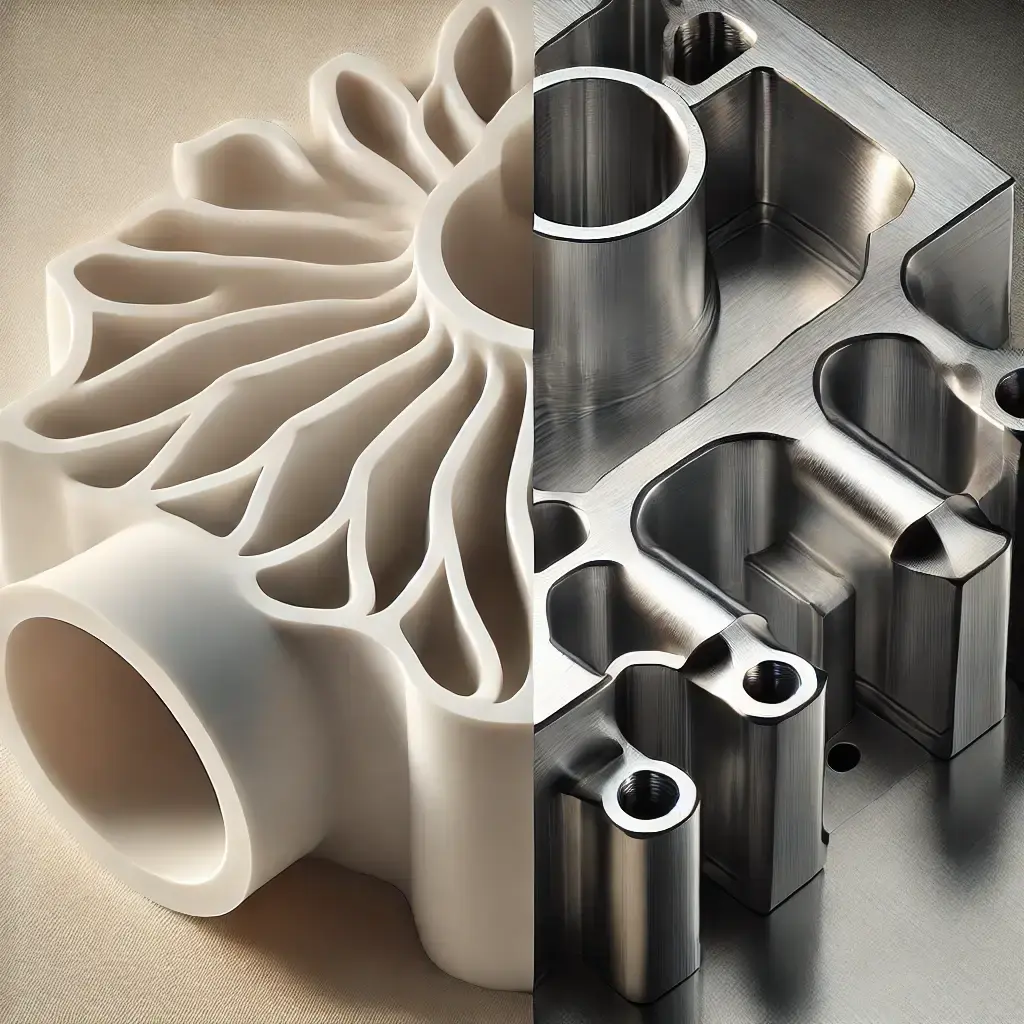
In this 2025 Guide, we clearly and technically analyse the differences between PVC and aluminium in CNC machining, helping you identify the best material for your project.
What you’ll find in this guide:
PVC: Characteristics and Benefits in CNC Machining
PVC (Polyvinyl Chloride) is a rigid, cost-effective plastic that is easy to machine.
In CNC applications it is valued for its dimensional stability, its chemical resistance and its excellent electrical insulation.
Key properties of PVC
-
Very lightweight
-
Self-extinguishing
-
Excellent chemical resistance
-
Electrical and thermal insulator
-
Low moisture absorption
-
Good dimensional stability
Advantages of PVC in CNC machining
-
Easy to mill, turn and drill, even with standard tools.
-
Low tool wear → shorter cycle times and reduced costs.
-
Accurate, clean surfaces and tight tolerances.
-
Ideal for prototypes and small batches.
Limitations
-
Lower mechanical strength compared with metals.
-
Sensitive to high temperatures (softening above 60–70°C).
-
Sensitive to UV radiation if not stabilised.
Typical applications
Aluminium: Strength and Precision for CNC Production
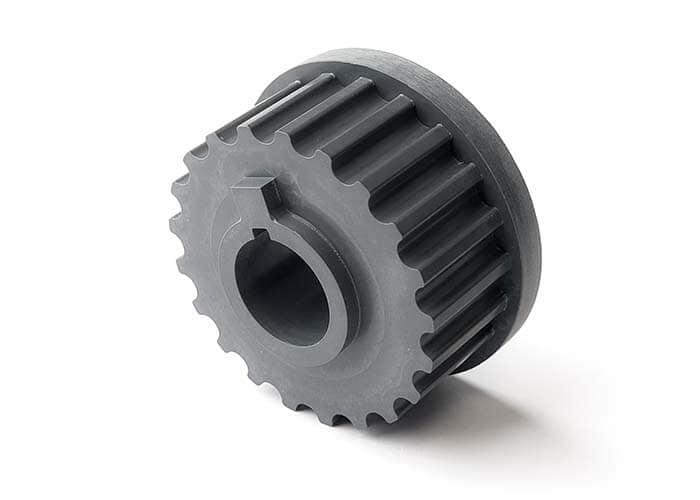
Aluminium is a lightweight yet strong metal, ideal for structural applications and high-performance technical components.
Key properties of aluminium
-
Lightweight yet very strong
-
Excellent rigidity
-
Good corrosion resistance
-
High thermal conductivity
-
100% recyclable
Advantages of aluminium in CNC machining
-
Very tight tolerances (ISO fine or medium class)
-
Excellent surface finish
-
Excellent geometrical accuracy
-
Suitable for high loads and structural parts
-
Can be milled, turned and drilled at high speed
Limitations
-
Higher cost compared with PVC
-
Poor thermal and electrical insulation
-
Hard alloys (e.g. 7075) are more difficult to weld
Typical applications
-
Structural frames
-
Supports, brackets and housings
-
Aerospace and automotive components
-
Heat sinks
-
Precision aesthetic parts
Technical Comparison: PVC vs Aluminium
| Characteristic |
PVC |
Aluminium |
| Weight |
Very lightweight |
Lightweight but heavier than PVC |
Mechanical strength
|
Low |
High |
| Thermal resistance |
Low |
Very good |
| Electrical insulation |
Excellent |
Poor |
| Chemical resistance |
Excellent |
Good |
| Material cost |
Low |
Medium |
| CNC machinability |
Very easy |
Precise and professional |
| Rigidity |
Medium |
High |
| Outdoor durability |
Medium (UV) |
High |
| Sustainability |
Low energy impact |
Highly recyclable |
Which Material Should You Choose for Your CNC Project?
Choose PVC if:
-
you want a cost-effective material that is easy to machine;
-
the part is not subject to high loads;
-
you need electrical or thermal insulation;
-
the environment is chemically aggressive;
-
it is important to reduce weight.
Choose aluminium if:
-
you require mechanical strength and durability;
-
the part is structural or high performance;
-
you are looking for CNC precision and high-quality surfaces;
-
the part will be used outdoors;
-
the project requires sustainability and recyclability.
Conclusions
The choice between PVC or aluminium depends on the requirements of your project:
-
PVC guarantees cost-effectiveness, insulation and ease of machining,
-
while aluminium offers strength, precision and long-term resistance.
Both materials perform excellently in CNC machining, but with very different performance profiles and fields of use.
At Weerg, we manufacture CNC components in PVC and aluminium using state-of-the-art machinery, guaranteeing tight tolerances, quick turnaround times and industrial-grade quality.
Upload your file now and get an instant quote for your PVC or aluminium parts

 Weerg staff: Oct 14, 2026