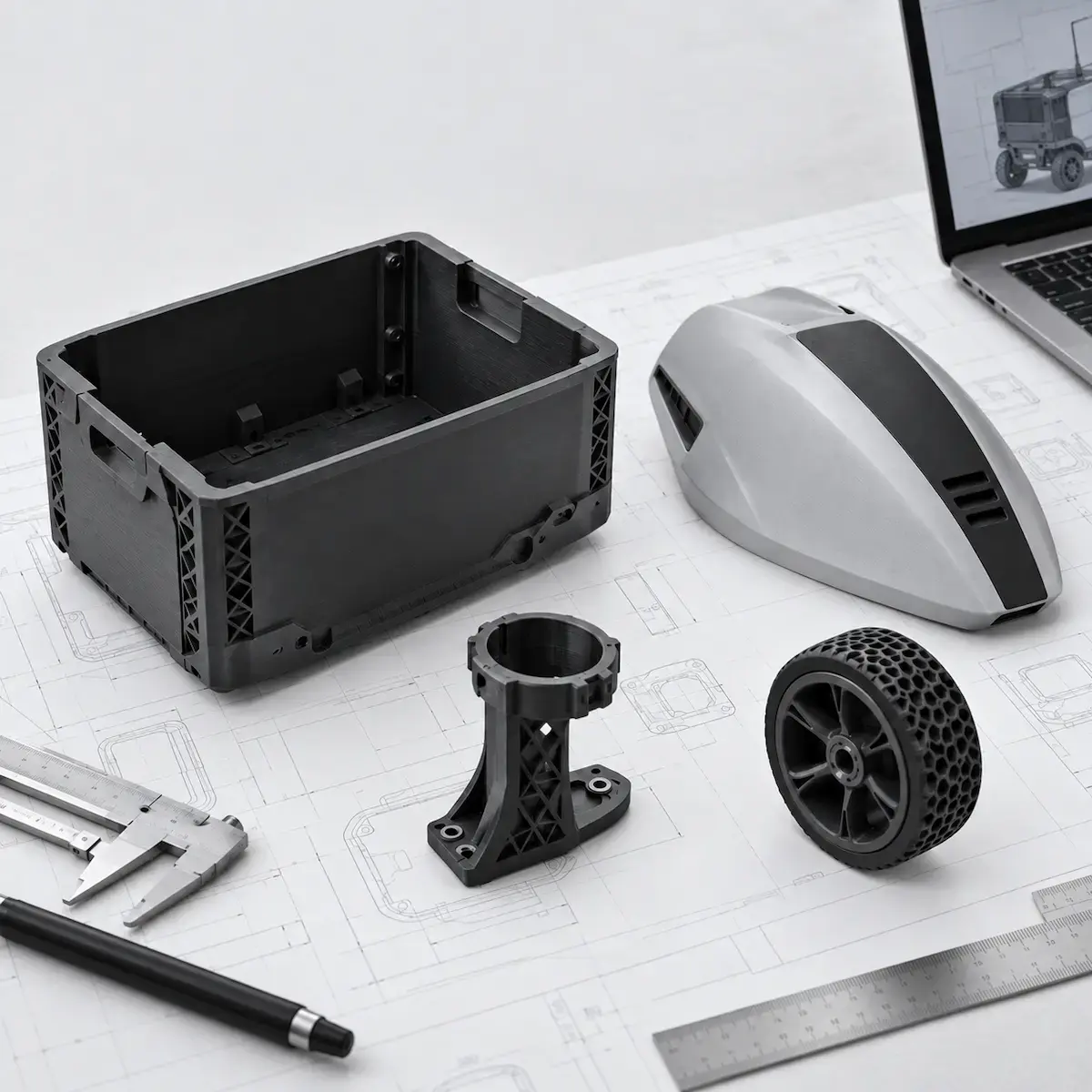
Polymers represent one of the most versatile families of materials in modern industry. Within this category, the fundamental distinction is between thermoplastic polymers and thermosetting polymers: two classes with profoundly different behaviour in relation to heat, processing and final use.
Understanding the differences between these two categories is essential in order to select the most appropriate material, prevent design errors and optimise component cost, performance and durability.
What are thermoplastic polymers
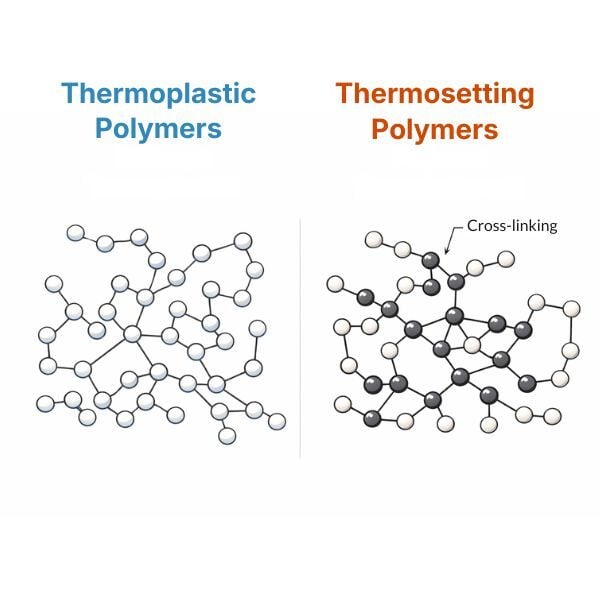
Thermoplastic polymers are materials that soften when heated and solidify again when cooled, without undergoing permanent chemical changes.
This process can be repeated multiple times.
Key characteristics
- reversible melting and solidification
- ability to be reshaped
- good recyclability
- wide range of mechanical properties
- excellent industrial processability
Common examples
Typical applications
- 3D printing (FDM, MJF)
- injection moulding
- extrusion
- mechanical components
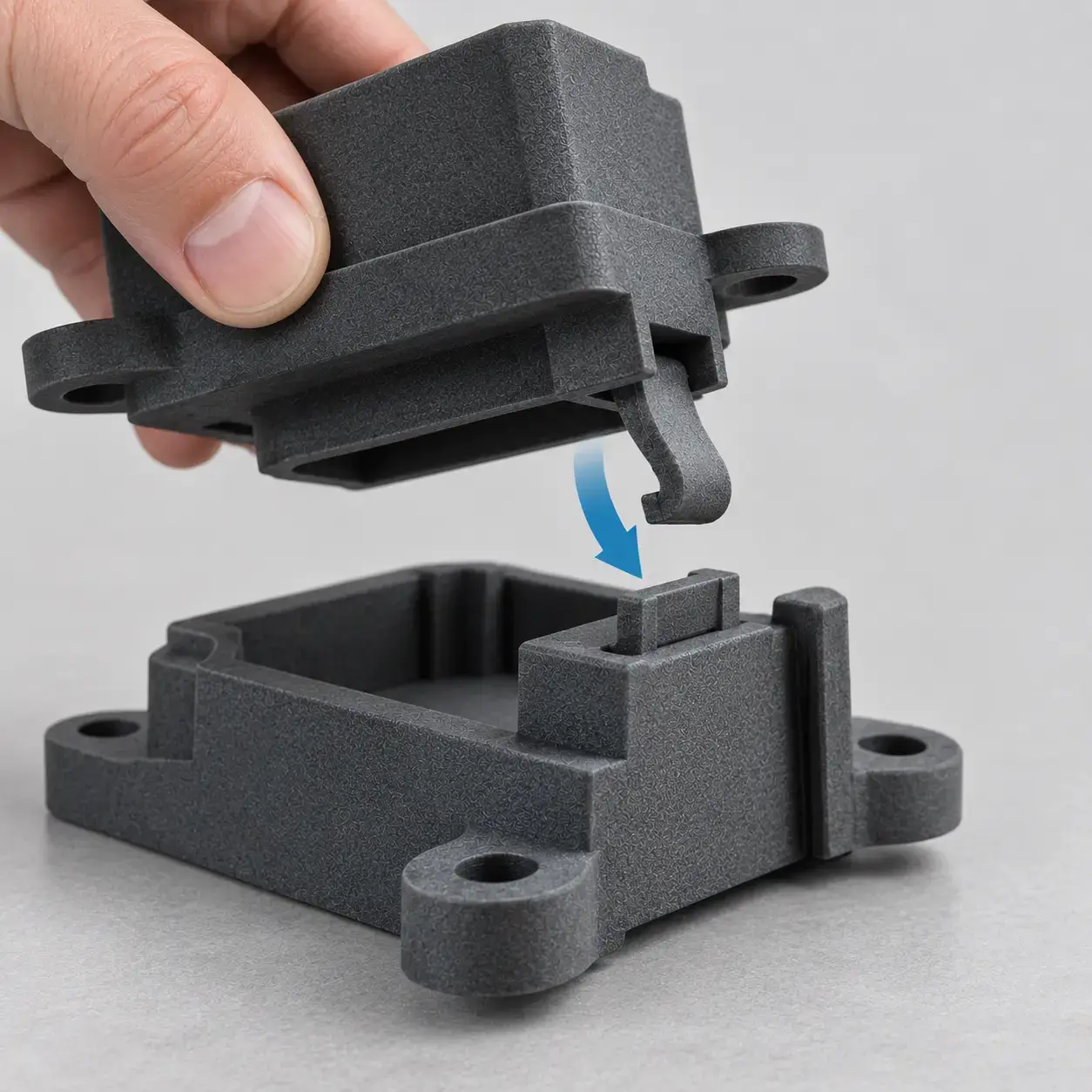
- housings, clips, plastic gears
- parts subject to maintenance or recycling
Thermoplastics are the dominant choice in modern industrial production.
Upload your file and choose the most suitable polymer for your project
What are thermosetting polymers
Thermosetting polymers are materials that, once cured by chemical reaction, can no longer be remelted or remolded.
Thermosetting polymers are materials that, once cured through a chemical reaction, can no longer be melted or reshaped.
The curing process (cross-linking) creates a stable and permanent three-dimensional structure.
Key characteristics
- irreversible curing
- high thermal stability
- high chemical resistance
- high structural rigidity
- not recyclable through remelting
Examples of thermosetting resins
- Epoxy resins
- Polyurethane resins
- Phenolic resins (Bakelite)
- Polyester resins
- Vinyl ester resins
Typical applications
- structural adhesives
- composites (glass fibre, carbon fibre)
- protective coatings
- electrical components
- moulds and tooling
- resin 3D printing (SLA/MSLA)
Thermosetting polymers are chosen when rigidity and heat resistance are required.
Comparison: thermoplastics vs thermosets
|
Feature
|
Thermoplastics
|
Thermosets
|
|
Behaviour under heat
|
Remeltable
|
Not remeltable
|
|
Recyclability
|
High
|
Low
|
|
Processing method
|
Melting
|
Chemical reaction
|
|
Heat resistance
|
Medium
|
High
|
|
Chemical resistance
|
Medium
|
Very High
|
|
Flexibility
|
Variable
|
Low
|
|
Reparability
|
Good
|
Limited
|
|
Use in 3D printing
|
FDM, MJF, SLS
|
SLA, MSLA
|
Thermoplastics and thermosets in 3D printing
Thermoplastics in 3D Printing
- used in FDM, MJF and SLS
- good mechanical properties
- functional and structural parts
- often anisotropic behaviour in FDM
- excellent choice for industrial components
Thermosets in 3D printing
- used in SLA and MSLA
- extremely high surface quality
- very fine details
- higher brittleness
- ideal for aesthetic prototypes and precision parts
When to choose a thermoplastic polymer
Choose a thermoplastic if:
- the component must be recyclable
- mechanical loads are expected
- functional parts are required
- the part may require maintenance
- industrial 3D printing or CNC machining is used
Examples: housings, gears, brackets, mechanical components.
When to choose a thermosetting polymer
Choose a thermoset if:
- high thermal stability is required
- very smooth surfaces are needed
- the component must not deform under heat
- composites or structural adhesives are involved
- aesthetics are a priority
Examples: mould resins, electrical components, high-definition prototypes.
Common mistakes when choosing a polymer
- assuming a thermoset is always stronger
- ignoring heat behaviour
- not considering recyclability
- confusing rigidity with strength
- choosing based on cost alone
The correct choice always depends on function, environment and manufacturing process.
Conclusions
Thermoplastic and thermosetting polymers meet different needs:
- thermoplastics dominate industrial production thanks to versatility and recyclability
- thermosets excel in thermal stability and rigid structural applications
Understanding this distinction is essential for designing reliable components, choosing the right manufacturing process and optimising performance and costs.
Want to choose the right polymer for your project?
Upload your file and get technical support for materials and processes
Frequently Asked Questions

 Weerg staff: Sep 30, 2026