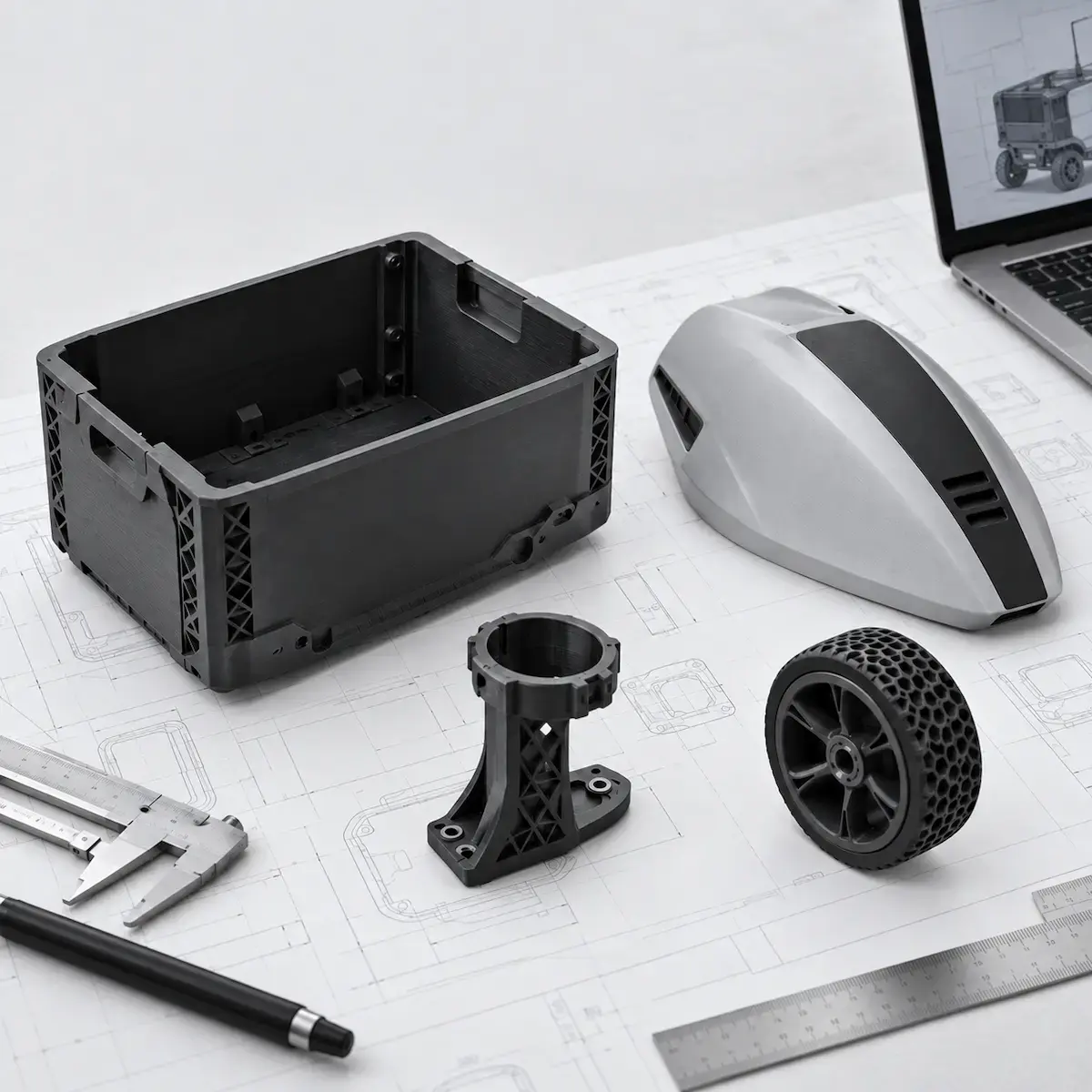
Reverse engineering is an increasingly widespread practice in modern industry, mechanical design and digital manufacturing.
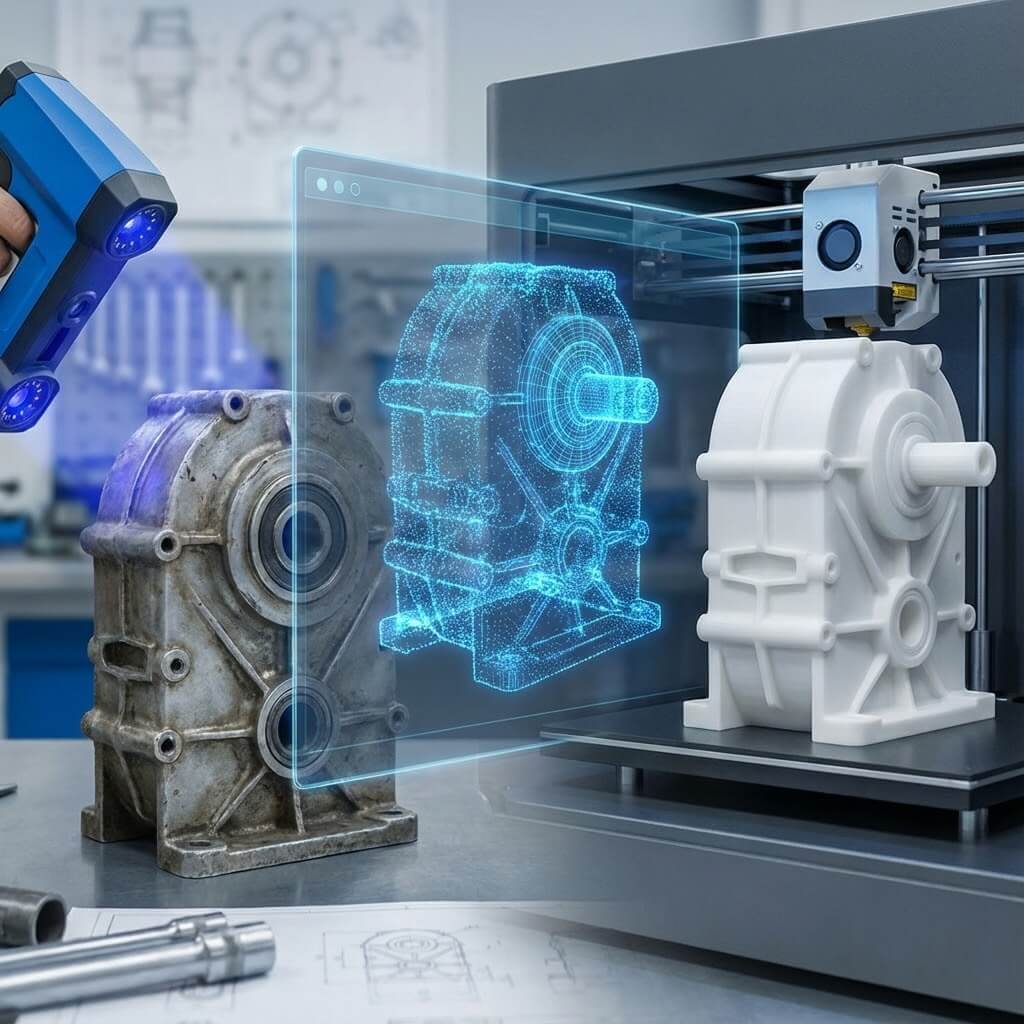
It allows the digital model of a physical object to be reconstructed, even when drawings, CAD files or technical documentation no longer exist.
Thanks to the evolution of 3D scanners, CAD software and manufacturing technologies such as CNC machining and 3D printing, reverse engineering is now a strategic tool for repairing, improving, reproducing or optimising existing components.
What is reverse engineering?
Reverse engineering is the process of starting from a real object to trace back its digital model, geometry, materials and functional characteristics.
In practice, it is the opposite of traditional design:
- traditional design: CAD → physical part
- reverse engineering: physical piece → CAD
The end result is an editable 3D file, ready for:
- 3D reprinting
- CNC machining
- FEM/CFD analysis
- design improvement
What is reverse engineering used for?
Reverse engineering is used in many practical contexts:
-
reconstructing out-of-production parts
-
repairing damaged components
-
replicating parts without original drawings
-
improving or lightweighting an existing component
-
adapting a part to new requirements
-
checking tolerances and deformations
-
analysing competitors’ products
It is very common in sectors where machine downtime is costly or where spare parts are no longer available.
How does reverse engineering work ?
The process generally follows a number of standard steps.
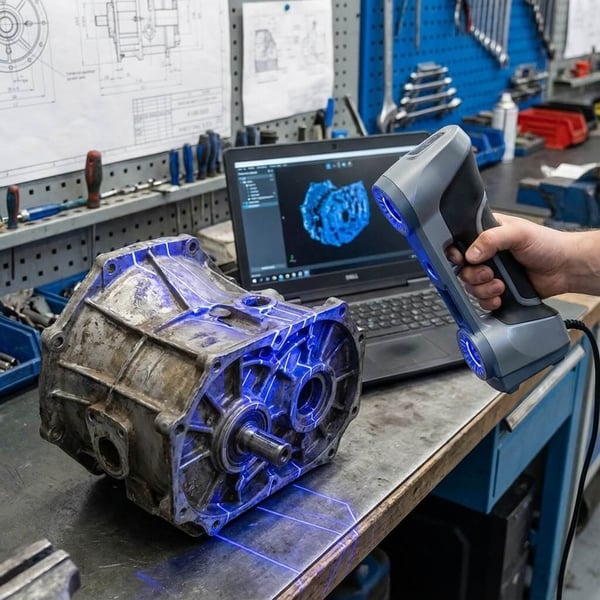
1. Geometry acquisition
The object is digitised using:
-
3D scanners (laser or structured light)
-
tomography (CT scan) for internal features
-
manual measurements (callipers, CMM) for simple geometries
2. Mesh creation
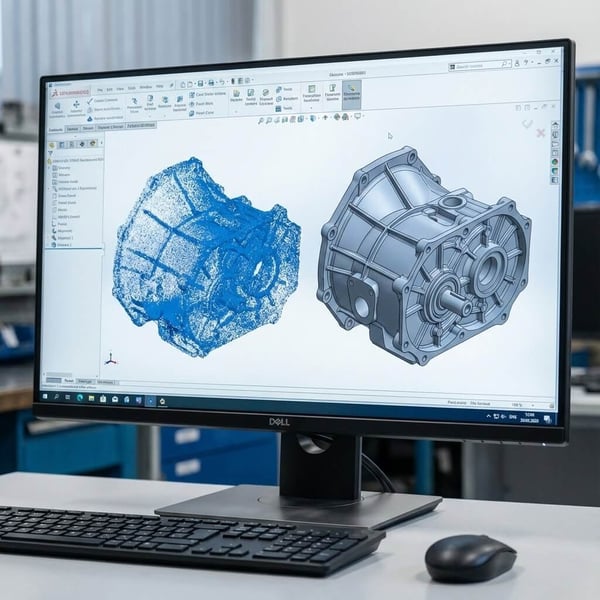
The scan produces a mesh (point cloud or triangulated surface).
3. Cleaning and optimisation
The mesh is:
- cleaned of noise
- closed
- simplified
- corrected in critical areas
4. CAD reconstruction
The model is converted into parametric CAD (solids and surfaces), editable and ready for production.
5. Production or enhancement
The final CAD file can be:
-
3D printed
-
CNC machined
-
structurally optimised
-
adapted to new materials
Technologies used in reverse engineering
3D scanners
- laser scanner → high precision
- structured light → excellent quality/speed balance
- portable scanners → ideal for large or in-situ parts
Software
- mesh processing software
- parametric CAD systems
- tools for complex surfaces
Manufacturing
- 3D printing (FDM, MJF, SLS, SLA)
- CNC machining
- hybrid manufacturing
reverse engineering and 3D printing
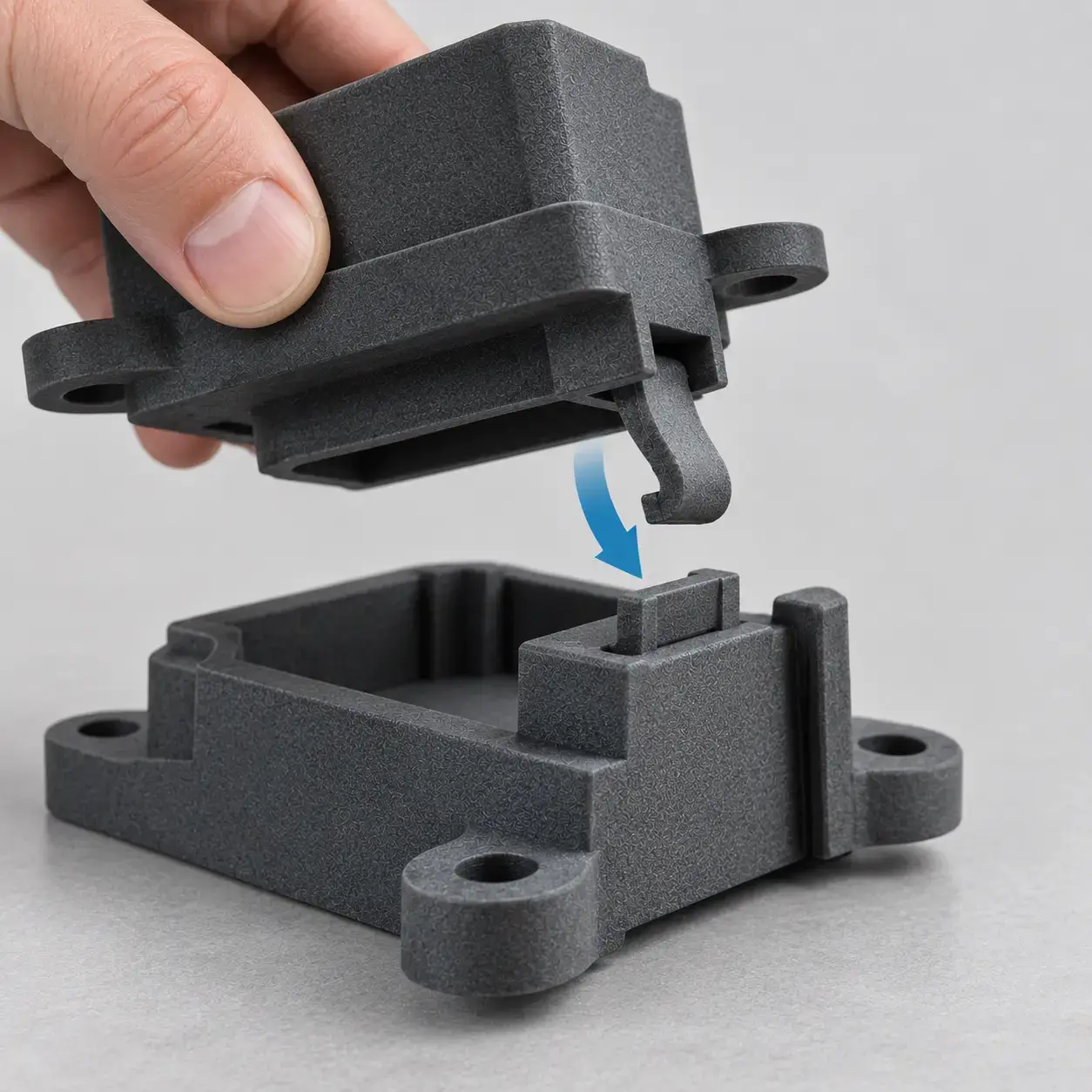
3D printing is one of the main allies of reverse engineering.
Key advantages:
-
rapid production of the reconstructed part
-
no need for moulds
-
ability to use materials different from the original
-
easy iteration and correction
It is ideal for:
reverse engineering and CNC machining
When the following are required:
-
tight tolerances
-
metallic materials
-
high mechanical strength
reverse engineering is often combined with CNC milling or turning.
The reconstructed model is adapted to:
-
machining strategies
-
required tolerances
-
final material
Which sectors use reverse engineering?
Reverse engineering is used across many industries.
Industry and maintenance
Automotive and motorsport
-
custom components
-
vehicle restoration
-
performance improvement
Aerospace
- component verification
- structural adaptations
Medical
- custom prosthetics
- custom-made devices
Design and cultural heritage
- restoration
- faithful reproductions
Advantages of reverse engineering
-
reduces time and costs
-
avoids complete redesign
-
enables targeted improvements
-
allows digitisation of physical objects
-
increases manufacturing flexibility
-
enables on-demand production
Limitations and considerations
Reverse engineering is not always straightforward:
-
highly complex geometries require time
-
deformed parts can distort measurements
-
advanced CAD skills are required
-
final quality depends on the initial scan
In addition, legal and patent aspects must always be considered when replicating an existing product.
Conclusions
Reverse engineering is now a fundamental tool for modern manufacturing, especially when integrated with 3D printing and CNC machining.
It allows a physical object to be transformed into a digital asset that can be improved and reproduced, reducing costs, lead times and dependence on original suppliers.
Whether it is an industrial spare part, a custom component or a restoration project, reverse engineering paves the way for more flexible, sustainable and intelligent production.
Do you have a component to reconstruct or improve?
Upload your file and get an instant quote

 Weerg staff: Sep 30, 2026