Sandblasting is a mechanical surface finishing process used in various industrial sectors to clean, smooth, or prepare surfaces through the abrasive action of particles propelled at high speed. Using a jet of compressed air or water, abrasive particles such as sand, glass beads, alumina, or sodium bicarbonate are shot onto a surface, removing unwanted layers of materials like paint, rust, or dirt, thereby smoothing the surface.
How does sandblasting work?
The principle behind sandblasting is the abrasive action of particles thrown against the surface to be treated. The particles are contained in a flow of air or water, which can vary in intensity and speed depending on the type of material and application. This process allows for:
- Cleaning: Removing surface impurities such as rust, paint, or unwanted coatings.
- Smoothing: Achieving more uniform surfaces by eliminating roughness or defects.
- Preparing: Enhancing the adhesion of paints or other coatings by increasing the surface roughness.
There are several variants of sandblasting, including:
- Dry Sandblasting: The most common method, where abrasive particles are shot dry against the surface, using a jet of air to transport the abrasive medium. Mainly used for cleaning and preparation.
- Wet Sandblasting: Adds water to the abrasive flow to reduce dust and improve cooling of delicate surfaces.
- Micro-sandblasting: Utilises finer abrasives for precision work on small surfaces or delicate items.
Abrasive materials used in sandblasting
Depending on the application, the abrasive materials can vary, with the most common being:
- Sand or Alumina: Ideal for removing rust and paint.
- Metal Shot: Used for cleaning and preparing metal surfaces.
- Glass Beads: Often employed to achieve smooth and satin finishes, particularly on metal surfaces.
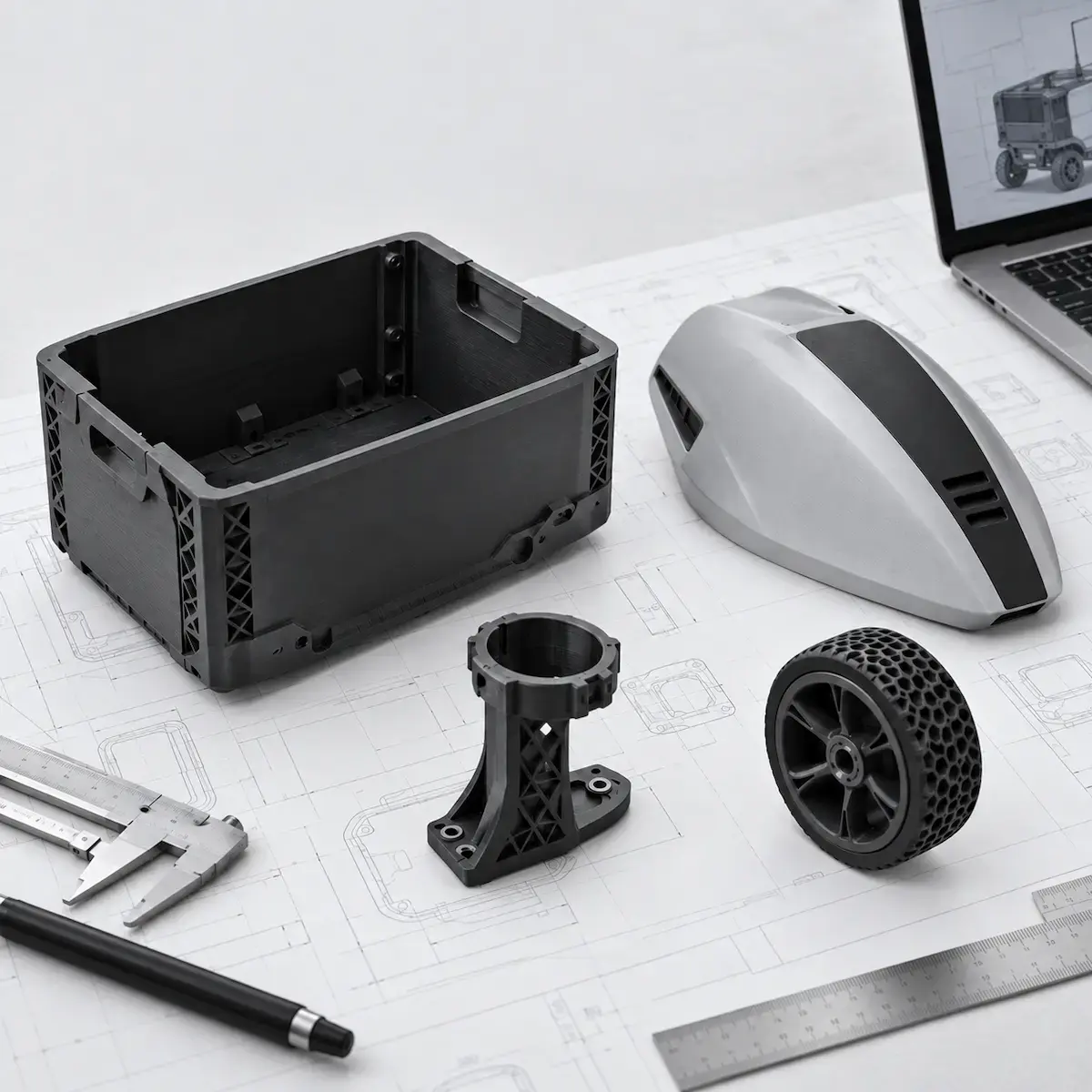
Sandblasting plays a particularly important role in the post-processing of parts produced with Multi Jet Fusion (MJF) technology, a powder-based 3D printing method developed by HP. MJF allows for the creation of components with high precision and complex details, using polymer powders like nylon. However, once printed, the parts require post-processing to remove unfused powder residues and enhance the surface finish. This is where sandblasting proves to be a crucial process.
Sandblasting MJF parts: how it works
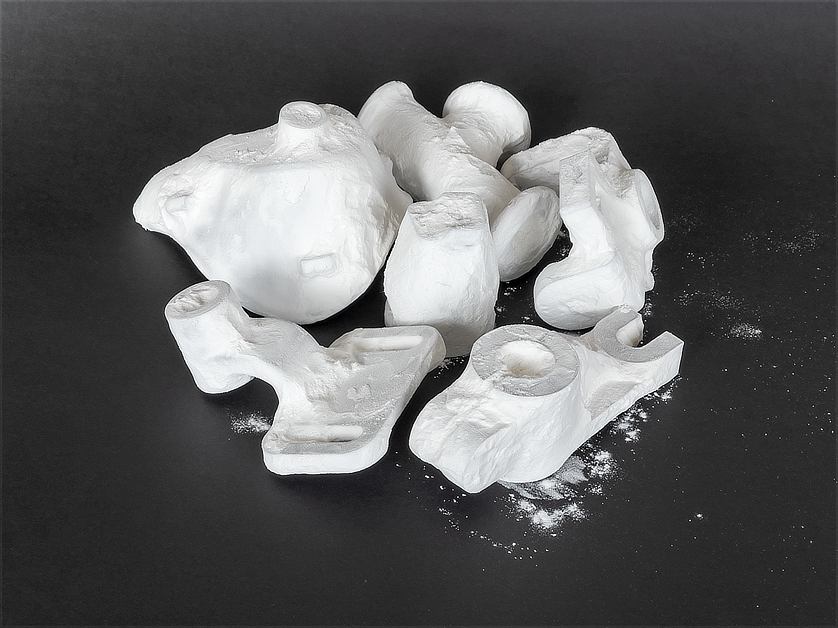
After MJF printing, the parts are surrounded by unfused powder. While much of this powder is removed via suction, finer residues may remain adhered to the surfaces. In this case, sandblasting is used to:
- Remove Powder Residues: Abrasive particles projected against the printed components completely eliminate residual powder, leaving the surface clean and ready for further treatments.
- Uniform the Surface Texture: Sandblasting improves the uniformity of the surface, removing roughness or defects created during the printing process.
- Prepare the Surface for Other Treatments: A sandblasted surface provides better adhesion for subsequent treatments such as painting or coating application.
Advantages of sandblasting in MJF 3D printing
- Enhanced Aesthetics: Sandblasting achieves smoother and more uniform surfaces on MJF parts, improving their final appearance.
- Efficiency: It is a quick and cost-effective process that reduces post-processing times compared to more complex methods.
- Ideal Preparation: Sandblasted parts are ready for painting or coating, thanks to the slightly rough surface that enhances adhesion.
Considerations
It is important to carefully adjust the type of abrasive and the jet pressure during sandblasting of 3D printed MJF parts to avoid damaging the surfaces or compromising their mechanical strength. More delicate abrasives, such as glass beads, are often preferred for treatments on nylon and other plastic materials used in MJF, as they reduce the risk of excessive abrasion. For these reasons, it is essential to rely on industry experts, such as Weerg, to achieve high-quality results in a very short time.
Conclusion
Sandblasting is a versatile process used across multiple sectors for cleaning, preparing, and finishing surfaces. In 3D printing, particularly in Multi Jet Fusion (MJF), sandblasting plays a fundamental role in the post-processing phase, ensuring that parts are free from powder residues, aesthetically pleasing, and ready for subsequent treatments. Thanks to its ability to enhance the quality and appearance of components, sandblasting remains an essential step in the production of MJF parts, guaranteeing optimal results quickly and with high precision.
GET YOUR FREE QUOTE

 Weerg staff: Sep 23, 2026