Bionics, the discipline that develops technologies inspired by biological systems, is making important progress, from neurally controlled prostheses to exoskeletons, through to humanoid robots. These applications pose engineering challenges linked to the production of lightweight, strong and geometrically complex components.
Technologies such as 3D printing, CNC machining and laser cutting make it possible to respond to these needs, accelerating the prototyping and development of customised solutions. This guide analyses their applications in bionics and humanoid robotics, with particular attention to the production of structural and functional components.
What Bionics is
Bionics (from the union of “biology” and “electronics”) studies biological systems to translate their principles, such as the efficiency of the joints and the lightness of bones, into engineering solutions. Today it’s the basis of prostheses, exoskeletons, biomedical devices, humanoid robots and robotic hands.
These applications share the same production needs: complex geometries, which must adapt to human anatomy or reproduce its movements, strong customisation and reduced volumes, often small runs or one-off pieces. It’s in the production of the components that 3D printing, CNC machining and laser cutting make the difference, because they make it possible to create lightweight, strong, bespoke parts without dedicated moulds and with rapid development times.
Humanoid robots: the new frontier
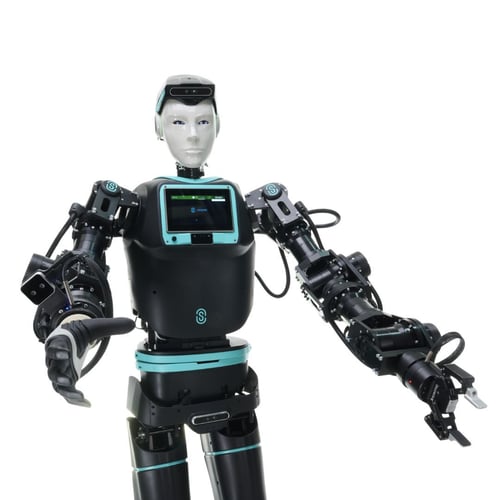
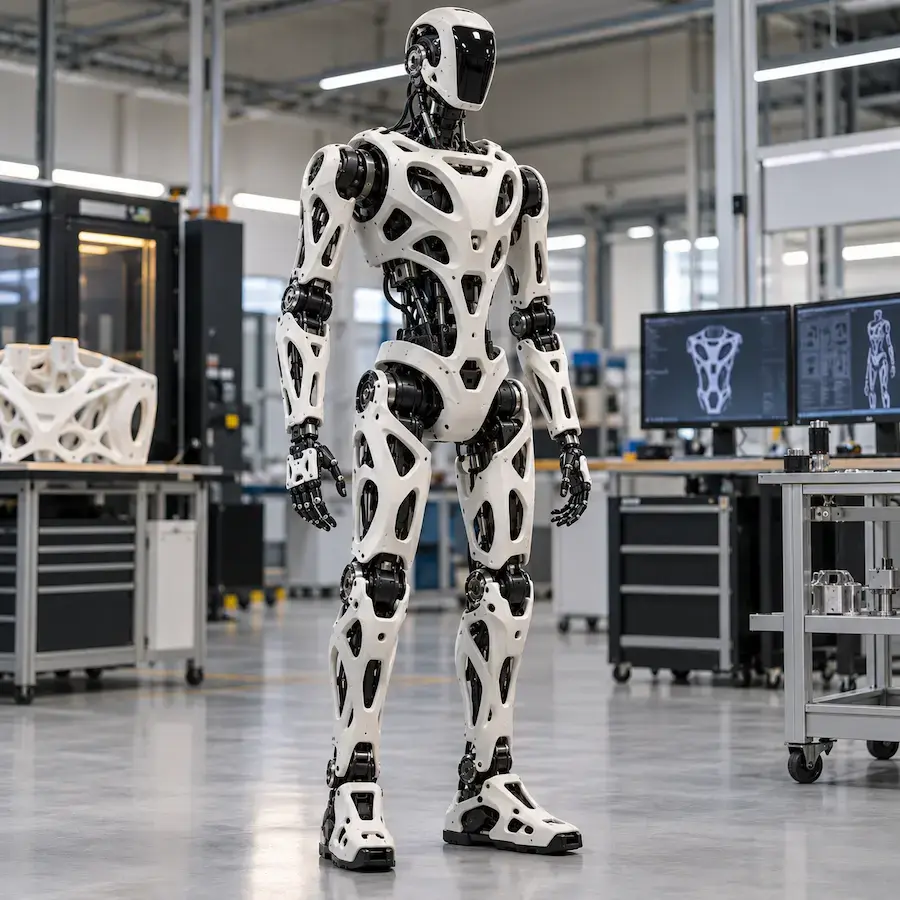
Humanoid robots represent one of the most advanced applications of bionics. They are machines designed to reproduce the structure and movements of the human body, equipped with legs, arms, articulated hands and sensors that allow them to walk, manipulate objects and operate in environments designed for people.
After years of experimentation, humanoid robots are moving from the laboratories to the first industrial applications. Technology and automotive companies are developing systems destined for logistics, production and assistance. This evolution requires structural, articular and protective mechanical components, capable of combining lightness, strength and precision, with ever-shorter development times.
A concrete example comes from Italy with the case of Oversonic Robotics, a company from the Brianza area that has developed RoBee, a cognitive humanoid robot already used in industry to handle and check materials or carry out risky activities. A project that demonstrates how humanoid robotics is moving from the laboratories to the factories, opening new challenges in the production of lightweight, strong and customised components.
From the production point of view, the main challenges are:
- Lightness: containing the weight to reduce the energy consumption and the power required of the actuators.
- Complex geometries: creating joints, anatomical coverings and optimised structures.
- Integration: designing housings for motors, sensors, electronics and wiring.
- Speed of development: frequently modifying and perfecting the components.
- Small runs: producing prototypes and first test batches without resorting to large-scale production.
The three technologies that build the body of bionic machines
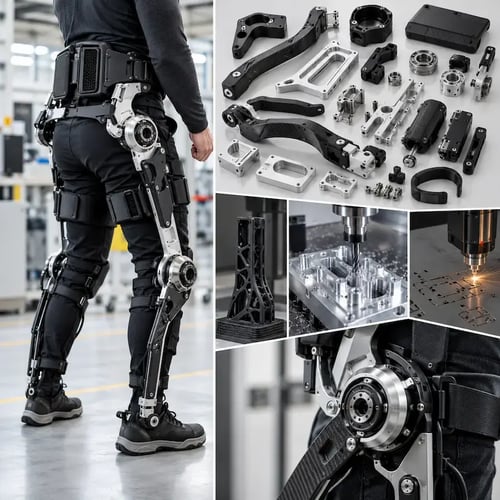
Every component of a bionic system or a humanoid robot must satisfy specific structural, functional or aesthetic requirements, which determine the choice of the production process. Let’s see how 3D printing, CNC machining and laser cutting respond to these different needs.
3D Printing: the freedom of organic shapes
3D printing is particularly suited to the production of bionic components thanks to the possibility of creating organic, complex geometries without resorting to moulds or dedicated tooling.
In bionics and humanoid robotics it’s used to produce:
-
Anatomical shells and coverings: covers that define the shape of prostheses, exoskeletons and humanoid robots.
-
Optimised load-bearing structures: frames lightened through topological optimisation, with weight reductions of 40 to 70% compared with solid components.
-
Housings for motors and sensors: components with complex geometries that integrate several functions in a single element.
-
Robotic hands and fingers: structures with internal cavities for artificial tendons, wiring and movement mechanisms.
-
Customised anatomical components: prosthetic sockets and interfaces for exoskeletons designed on the physical characteristics of the patient.
-
Functional prototypes: components used to verify and perfect the design in the various development stages.
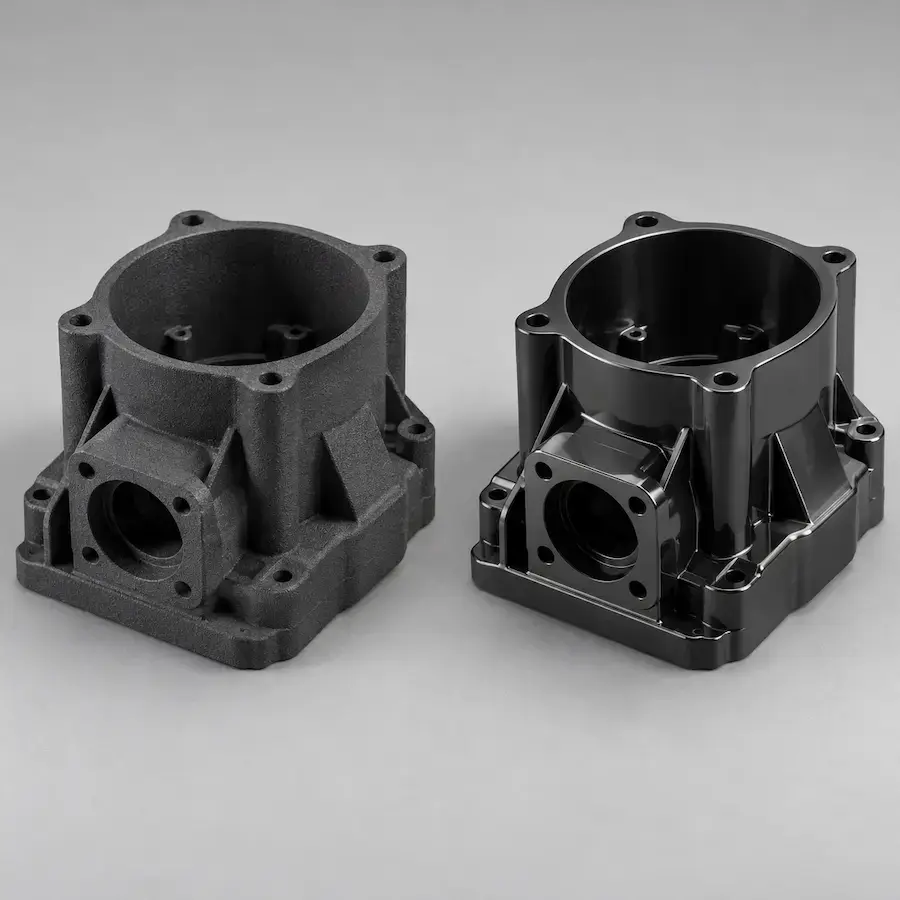
Among the most used materials in MJF printing we find PA12, for lightweight, strong functional components, PA11, particularly suited to parts subject to repeated flexing thanks to its high fatigue resistance, and TPU, used for flexible elements, padding and interfaces in contact with the body. In FDM printing, on the other hand, PA12 CF is used, reinforced with carbon fibre for greater stiffness, ABS for medical use and the high-performance polymers, indicated for structural components and applications that require the replacement of metal parts.
CNC machining: nanometric precision of the components
CNC machining is indicated when tight tolerances, precise surfaces and mechanical strength are needed, especially in the joints and the most stressed structural components of bionic systems and humanoid robots.
In bionics and humanoid robotics, CNC makes it possible to create:
-
Joints and precision articulations, with accurate mating surfaces.
-
Seats for bearings and gearboxes, essential for the correct functioning of the actuators.
-
Metal structural components, designed to withstand mechanical stresses.
-
Shafts, pins and transmission elements, fundamental for movement.
-
Threaded parts, which allow assembly without additional inserts.
Stainless steel (303, 304 and 316L) offers mechanical and corrosion resistance. 316L, in particular, finds use in the medical field for its biocompatibility, in the formulations compliant with the required specifications. Aluminium, on the other hand, is preferred in the structures of humanoids for its lightness and the favourable strength-to-weight ratio.
Laser cutting: flat structures and sheet metal components
Laser cutting makes it possible to create two-dimensional sheet metal components, which constitute brackets, plates, supports and structures of a bionic system.
In bionics and humanoids, laser cutting produces:
-
Brackets and mounting plates to connect motors, sensors and structural parts.
-
Frames and base structures in steel or aluminium.
-
Supports for the electronics and the control systems.
-
Shaped sheet metal components, also to be bent to obtain three-dimensional geometries.
-
Structural elements for exoskeletons, such as reinforcements and supports.
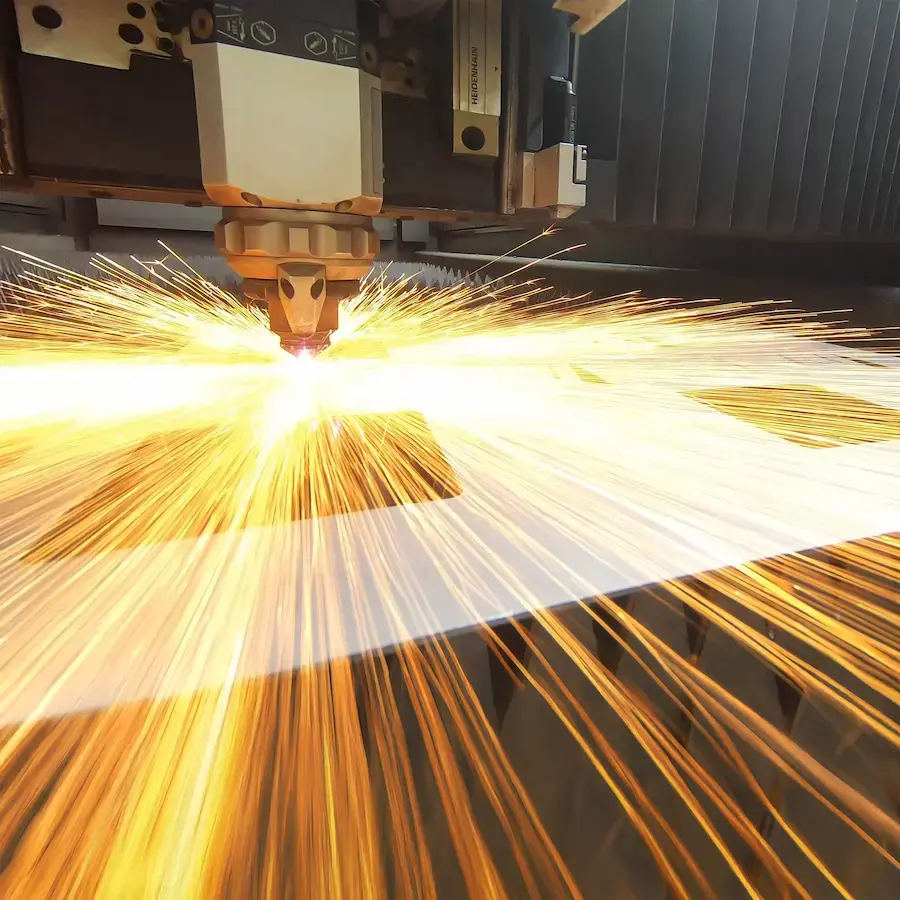
Stainless steel, carbon steel and aluminium make it possible to obtain strong components, with variable weight and costs according to the material. Laser cutting can be integrated with CNC machining to create threads and details that require tighter tolerances.
Why on-demand production is decisive for bionics
Bionics and humanoid robotics are sectors characterised by rapid development, customisation and small production batches. On-demand production responds to these needs, from prototyping to the first runs.
Rapid iteration. Robotic arms and humanoids go through numerous design revisions. On-demand production makes it possible to create and test new versions within a few days instead of weeks, updating the CAD and accelerating development.
Customisation. Prostheses and exoskeletons must adapt to the morphology of the user. Starting from digital models, also obtained through 3D scanning, it’s possible to create bespoke components without dedicated moulds.
Lightness. Topological optimisation and advanced materials such as carbon-fibre-reinforced PEEK, ULTEM, PEEK and aluminium make it possible to reduce the weight while maintaining adequate mechanical performance, a fundamental requirement for wearable devices and humanoid robots.
Production without moulds and in small batches. From the prototype to the first runs, on-demand production makes it possible to create only the necessary quantities, reducing initial investments, stock and constraints linked to minimum volumes.
Several technologies, a single supplier. A bionic system integrates 3D-printed, CNC-machined and laser-cut components. Thanks to 100% in-house production, Weerg brings together these technologies in a single ordering process, from the uploading of the CAD file to the quote, simplifying development and procurement.
Conclusion
Bionics and humanoid robots are transforming the way machines imitate and amplify the capabilities of the human body, from prostheses that restore movement to anthropomorphic robots used in factories. The production of their components relies on three technologies: 3D printing to create complex organic shapes, CNC machining to obtain precision metal components and laser cutting to produce flat elements.
Together, these technologies respond to the needs of the sector in terms of lightness, complexity, customisation, speed of development and production in small runs. With the move of bionics from the laboratory to the market, they become fundamental tools for creating the machines of the future.
Are you developing components for robotics, bionics or a humanoid system?
Upload your file and get a quote
Frequently Asked Questions About Bionics

 Weerg staff: Nov 4, 2026