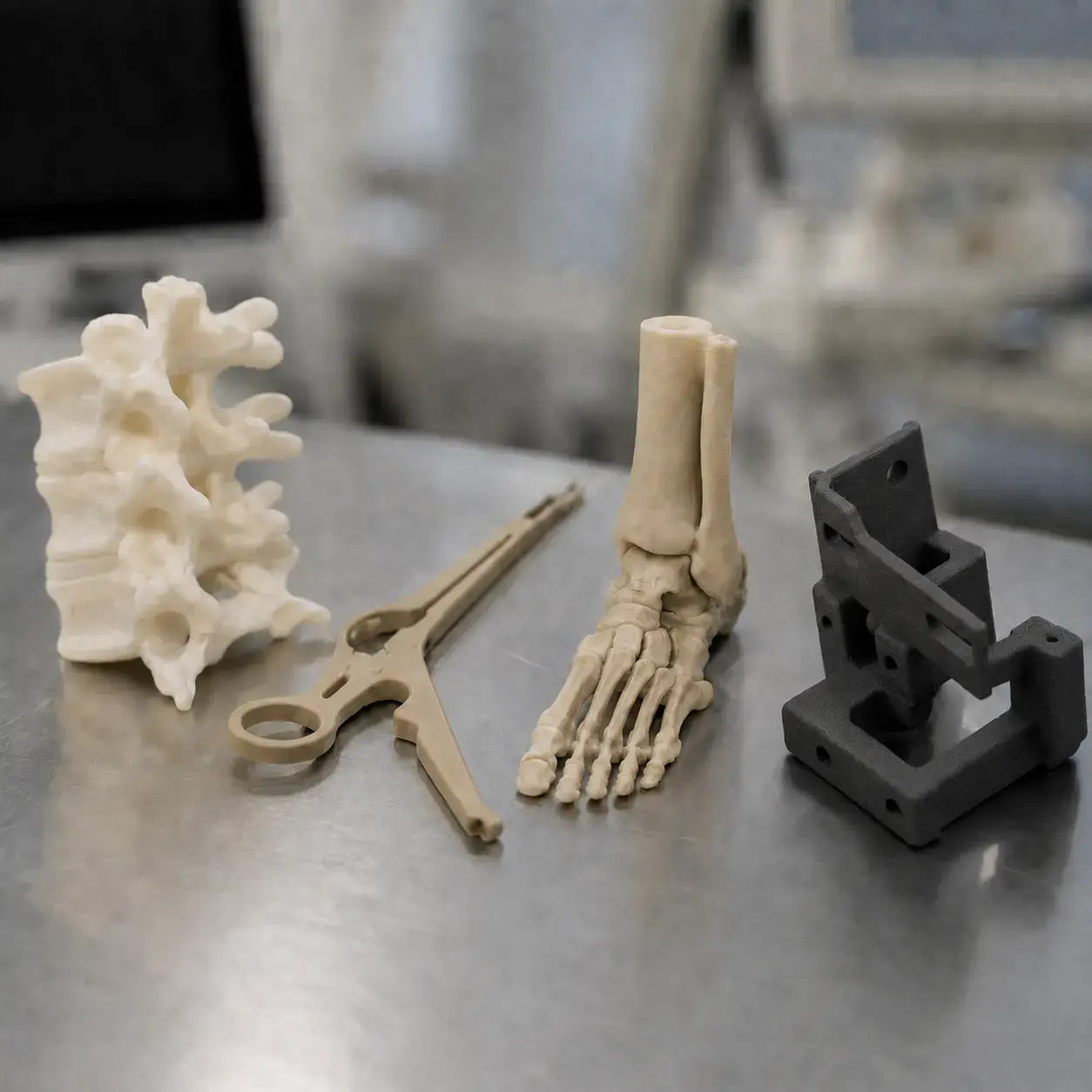
Civil inspection and monitoring systems, from drones to crawler robots to sensors for infrastructure and plants, often require custom technical components not available off the shelf. Industrial 3D printing makes it possible to produce them quickly, even in series, with materials suited to requirements such as lightness, vibration resistance, electrical insulation and flame-retardant behaviour.
This guide describes use scenarios, typical components and the right materials for those who design and produce inspection systems for energy, infrastructure and construction.
Use scenarios: civil inspection and monitoring
Civil inspection systems find application in numerous contexts, each characterised by specific technical requirements. 3D printing makes it possible to quickly develop custom components, without the costs associated with the production of moulds.
- Infrastructure inspection: drones, crawler robots and scanning systems for bridges, viaducts, dams and tunnels, with sensor mounts adapted to specific geometries.
- Inspection of high-voltage power lines: lightweight, insulating housings for thermal cameras and sensors intended to detect overheating, insulation defects and conductor damage.
- Inspection of industrial plants: components for robots, fire sensors and vision systems used in refineries, chemical plants and energy sites, often subject to UL 94 V-0 self-extinguishing requirements.
- Structural monitoring: enclosures and mounts for accelerometers, strain gauges and humidity sensors permanently installed on buildings and civil works.
- Inspection of pipelines and tanks: components for magnetic crawlers, probes and ultrasonic systems, designed to resist chemical agents and aggressive environments.
- Inspection of photovoltaic and wind plants: mounts for thermal cameras and sensors used in detecting anomalies on solar panels and in the inspection of wind blades.
- Construction-site monitoring: guards and housings resistant to dust, impacts and UV rays for cameras, scanners and environmental sensors.
- Inspection of tunnels and underground works: components for robots, lighting systems and sensors intended for gas monitoring.
From the lightness required by drones to the chemical resistance of crawlers, through to electrical insulation and flame-retardant behaviour, 3D printing makes it possible to combine materials and geometries according to each specific application.
The critical components to customise
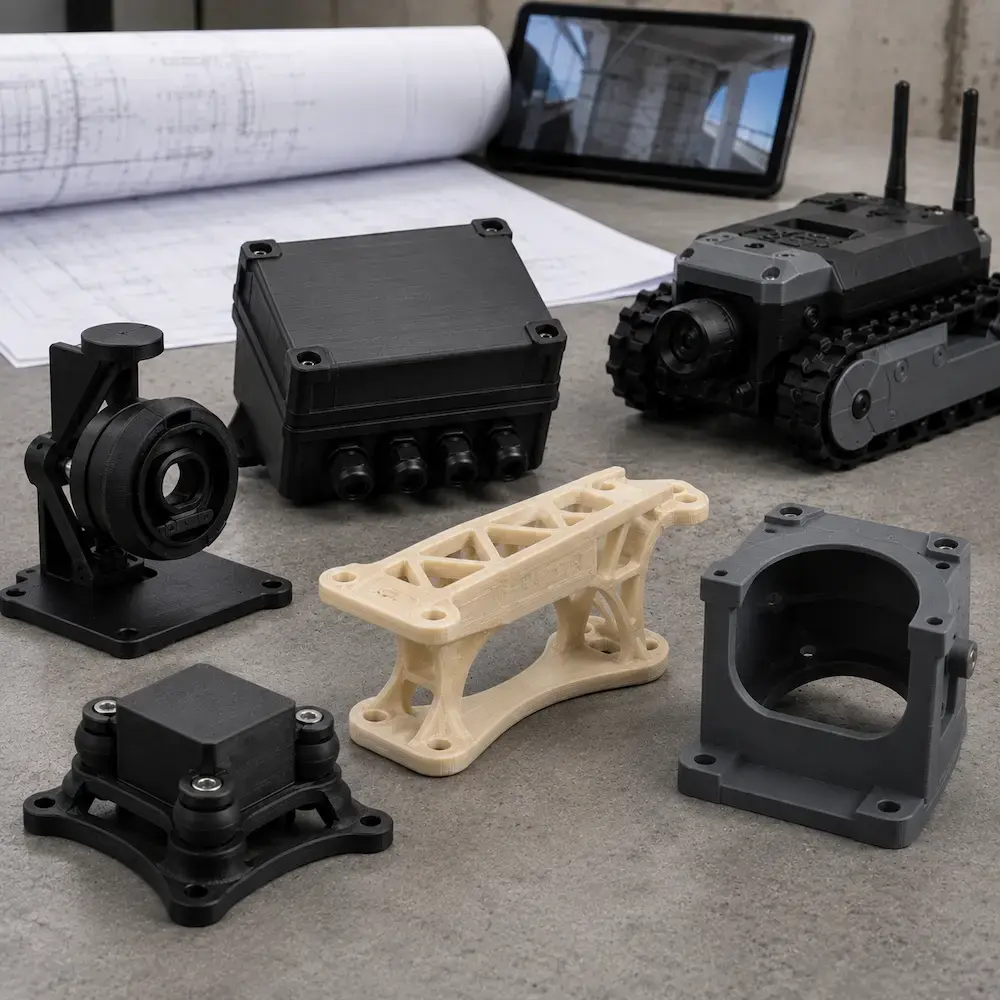
In inspection systems, many components must be adapted to the sensor, the vehicle or the structure to be monitored. 3D printing makes it possible to produce them quickly, even in small runs and with geometries hard to achieve through traditional technologies.
Mounts for sensors and cameras
Optical cameras, thermal cameras, LiDAR, radar and inertial sensors require specific fastening systems:
- stabilised, anti-vibration mounts;
- LiDAR mounts with precise orientation;
- custom gimbals for drones and crawlers;
- dual-payload mounts for thermal camera and optical camera;
- standard or custom quick-release attachments;
- extendable, articulated arms;
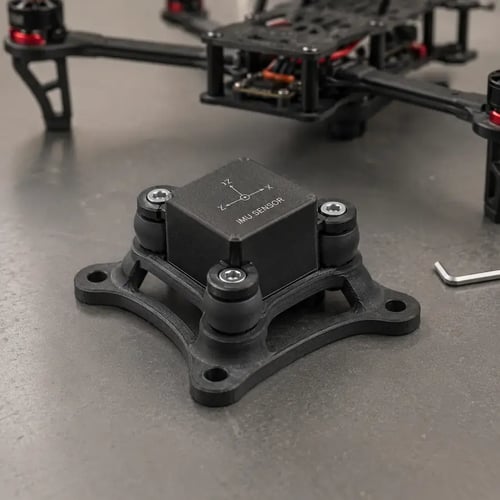
- anti-vibration elements in TPU for sensitive sensors.
Housings for electronics
Flight controllers, on-board computers, radios, GPS and batteries must be protected according to the application:
- cases for the electronics of drones and robots;
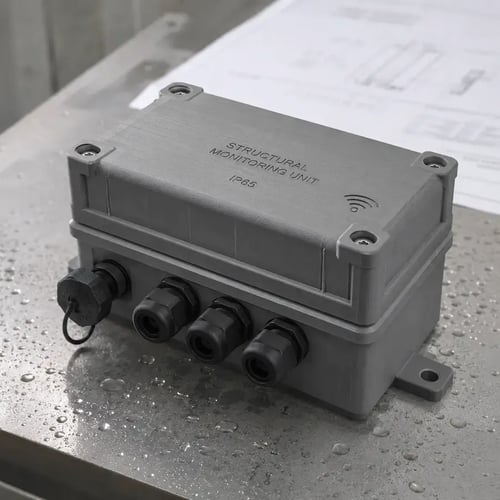
- IP65–IP67 enclosures for outdoor applications;
- housings shielded against electromagnetic interference;
- housings with integrated cooling;
- battery containers with venting systems;
- covers for directional and omnidirectional antennas.
Fairings for civil drones and UAVs
The rapid development cycles and reduced production volumes of inspection drones make 3D printing particularly suited to the production of:
- fuselages and frames for prototypes and limited runs;
- aerodynamic fairings;
- rotor guards for confined environments;
- custom covers for OEM applications;
- secondary structural components with high stiffness;
- housings for interchangeable payloads.
Components for inspection robots
Magnetic crawlers, pipeline robots and tethered systems require dedicated mechanical solutions:
- custom grippers and end-effectors;
- guides adapted to the diameter of the pipes;
- wheels and tracks with anti-slip inserts;
- articulated arms and custom joints;
- cable holders and cable grommets;
- specific probes, hooks and tools.
Components for fixed monitoring
Permanent installations must guarantee protection and durability over time:
- cases for control units with an IP protection rating;
- brackets for walls, poles and structures;
- anti-vandal and weather-resistant guards;
- housings for accelerometers and strain gauges;
- cable trunking and grommets for permanent installations.
Technical requirements of inspection components
Components intended for professional inspection systems must operate in particularly demanding conditions, often characterised by the coexistence of several requirements. The choice of material depends mainly on five parameters.
Lightness
In civil drones, every additional gram affects flight autonomy. In systems installed on robotic arms or moving structures, on the other hand, mass influences inertia and the generation of vibration. For suspended, mobile or flight-intended components, materials characterised by low density and high specific stiffness are therefore preferable.
Resistance to vibration and impacts
Tractors, robots, drones, electric motors and aircraft systems generate continuous vibration, which can cause fatigue phenomena and quickly compromise the integrity of components. An excessively rigid sensor mount, for example, can develop cracks after a few hours of operation.
There are two main strategies:
- use tough materials, with high elongation at break, such as PA11 Gen 2, which with an A% value of 27.5% represents one of the most suitable solutions for applications subject to fatigue;
- use flexible materials, such as TPU, for anti-vibration mounts, isolators and gaskets, capable of absorbing oscillations thanks to their elasticity.
Flame-retardant behaviour (UL94 V-0)
Critical industrial environments, such as refineries, chemical plants, energy sites, tunnels and ATEX areas, require the use of flame-retardant materials.
One of the reference materials for 3D printing in these contexts is PA12 FR, classified UL 94 V-0. After removal of the ignition source, the material self-extinguishes within a few seconds, doesn't produce incandescent drips and limits the propagation of combustion.
For applications with more stringent requirements, ULTEM represents a higher-tier alternative, especially when FST certifications and compliance with aerospace or railway regulations, such as FAR 25.853, are required.
Electrical Insulation
The inspection of high-voltage lines, transformer substations and electrical plants requires components with adequate dielectric properties.
Carbon-fibre-reinforced materials aren't suitable for these applications, since the fibres confer electrical conductivity on the component. The most appropriate solutions include:
- PEEK GF, reinforced with insulating glass fibre, for structural components that require high mechanical performance and electrical insulation;
- PA12 FR, with an indicative volume resistivity of about 5x10¹² Ω·m, for housings and guards of electronic components.
Resistance to environmental agents
Components permanently installed outdoors must withstand years of exposure to UV rays, thermal cycles, humidity, dust and contaminating agents of industrial origin.
For long-lasting outdoor applications, the most suitable solutions are:
- ASA, thanks to its intrinsic resistance to UV rays;
- TPU, for its good resistance to UV rays and hydrolysis;
- PA12 and PA11 with a vapor smoothing finish, which can offer good levels of protection for indicative periods of between three and five years.
- In chemically aggressive environments, such as refineries and chemical plants, high-performance materials such as PEEK, PPS CF and ULTEM are preferable instead.
Recommended materials for inspection systems
| Material |
Technology |
Strengths |
Inspection use cases |
| PA12 FR (Flame Retardant) |
MJF |
UL94 V-0, volume resistivity 5×10¹² Ω·m, HDT 97 °C, insulating |
Electronic housings for industrial plants, components in ATEX areas, inspection of chemical/energy plants |
| PA12 nylon |
MJF |
Low hygroscopicity, impact resistance; vapor smoothing for outdoor use |
IoT housings, sensor mounts, spare parts for legacy systems |
| PA11 Gen 2 nylon |
MJF |
Bio-based, very high ductility (A% 27.5), fatigue resistance for vibration |
Drone components, mounts under vibration, tough flexible parts |
| PEEK CF |
FDM |
Maximum specific stiffness, high temperatures, structural lightness |
Structural drone frames, high-stiffness inspection brackets |
| PEEK GF |
FDM |
High-temperature electrical insulation, chemical resistance |
Components for power-line inspection, insulators in hot environments |
| ULTEM (PEI) |
FDM |
UL94 V-0, FST (FAR 25.853), EN 45545, resistance to solvents |
Certified drone cabin interiors, aerospace inspection components |
| PPS CF |
FDM |
Chemical resistance to industrial solvents, thermal stability |
Refinery inspection robots, components in harsh chemical environments |
| ASA |
FDM |
Intrinsically UV-resistant, stable colours |
Outdoor covers, permanent outdoor housings |
| TPU |
FDM |
UV, elasticity, vibration absorption, hydrolysis resistance |
Anti-vibration isolators, gaskets, flexible guards |
| PETG ESD |
FDM |
Electrostatic dissipation, good resistance to oils |
Housings for sensitive electronics, components with ESD requirements |
Customisation, small runs and rapid spare parts
The value of 3D printing in inspection systems doesn't reside only in the production of the individual component, but above all in the development model it makes possible. An approach particularly suited to a sector in which every plant has specific characteristics and the cycles of technological evolution are ever faster.
Total customisation for every plant: every infrastructure to be inspected (a bridge, a pipeline, a power line) has specific geometries and constraints. With 3D printing, mounts, housings and functional components adapt to the project, not vice versa.
Small runs without moulds: The production of 10, 50 or 200 units of an inspection system is hardly compatible with traditional injection-moulding technologies, which may require initial investments of over €15,000 for the production of the mould and minimum quantities in the order of thousands of pieces. 3D printing eliminates the need for the mould, makes it possible to obtain rapid quotes and makes the production of small and medium runs economically sustainable.
Rapid prototyping: makes it possible to complete the iterations between the pilot version and the definitive one in a few days. Engineers test the first prototype mounted on the vehicle, update the CAD, reprint and produce a new version within the same week.
On-demand spare parts: the components of inspection systems can be stored in a digital library and produced only when needed, avoiding the management of physical stock and the risk of warehouse obsolescence. This approach is particularly useful for legacy systems still operational, for which the original spare parts can be hard to find, and for the urgent replacement of components on stopped or damaged units.
Rapid production and delivery: instant quote by uploading the 3D file and production in 1–3 working days.
A concrete case: a drone for power-line inspection
An engineering company specialising in the development of drones for the thermographic inspection of high-voltage lines needed 40 custom housings for the thermal camera's gimbal. The requirements were particularly stringent: electrical insulation, to reduce the risk of interference and discharges; weight under 200 grams per component, so as not to compromise the drone's autonomy; resistance to UV rays and to operating temperatures up to 60 °C. Injection moulding wasn't economically sustainable for such a limited volume, while CNC machining would have entailed too high a unit cost. The solution was FDM 3D printing in PEEK GF: online quote, delivery in five working days, intrinsic electrical insulation, a density of 1.35 g/cm³ and a thermal resistance far superior to the project requirements.
Similar needs arise every day in the production of aerodynamic fairings for drones, flame-retardant housings in PA12 FR for robots used in refinery inspections, anti-vibration mounts in TPU for inertial sensors and containers for structural-monitoring control units installed on bridges and viaducts.
Conclusion
Civil inspection and monitoring systems require numerous custom components: sensor mounts, watertight housings, fairings and spare parts intended for legacy systems.
Industrial 3D printing makes it possible to meet these needs through materials specific to each application: flame-retardant PA12 FR for critical industrial environments, PEEK CF for structural drone components, PEEK GF for electrical-inspection applications, TPU for anti-vibration solutions and ASA for components exposed to UV rays for long periods.
Thanks to MJF technologies in PA12, PA12 FR and PA11 nylon, industrial FDM printing in PEEK, ULTEM, PPS CF and other technical materials, and delivery times starting from 1–3 working days, bringing a component from the digital file to use in the field today requires a few hours of design, not months of production preparation.
Do you need to produce components for inspection systems?
Upload your file and get a quote
Frequently Asked Questions

 Weerg staff: Aug 26, 2026