TPE (Thermoplastic Elastomer) is a class of polymer materials that combines the elastic properties of rubber with the processability of thermoplastics.
Thanks to this unique combination, TPEs are increasingly used in sectors such as automotive, electronics, consumer goods, medical applications, and 3D printing.
These materials enable the production of flexible, durable and recyclable components, while also offering ease of processing and competitive costs.
What is TPE
TPE is a thermoplastic elastomer, meaning a material that exhibits rubber-like elastic behaviour but can be melted and reshaped like a plastic.
Unlike traditional vulcanised rubber:
- it does not require irreversible chemical processes
- it can be remelted and reused
- it can be processed using standard industrial methods
This makes it highly versatile and well suited to modern industrial manufacturing.
Structure of TPEs
TPEs are made up of two different polymeric phases:
- an elastic phase (rubber), which provides flexibility
- a thermoplastic phase, which gives stability and processability
This structure allows the material to:
- deform elastically
- recover its original shape
- be processed through melting
UPLOAD YOUR FILE AND GET YOUR PARTS
Main Properties of TPE
TPEs offer a well-balanced combination of properties:
Elasticity
They can deform and return to their original shape without permanent damage.
Flexibility
They remain flexible even at low temperatures.
Good impact resistance
They absorb energy without breaking easily.
Grip and adhesion
Ideal for non-slip surfaces and ergonomic handles.
Recyclability
As thermoplastics, they can be remelted and reused.
Good processability
They can be processed through:
- injection moulding
- extrusion
- 3D printing
- overmoulding
Types of TPE
The TPE family includes several materials, such as:
TPE-S (Styrene-based TPE)
Among the most common, used in consumer products and automotive applications.
TPE-O (Olefinic TPE)
Used in applications requiring weather resistance.
TPE-V (Thermoplastic vulcanisates)
Offer performance similar to vulcanised rubber.
TPE-E (Copolyester elastomers)
Provide good chemical and thermal resistance.
TPE-U
Includes thermoplastic polyurethanes (TPU), a subcategory with higher performance.
TPE Hardness
TPEs are available in a wide range of Shore hardness levels, which determine material rigidity.
Indicatively:
- Shore A 20–40 → very soft
- Shore A 50–70 → medium flexibility
- Shore A 80–95 → more rigid
This allows the material to be adapted to many different applications.
Applications of TPE
Thanks to their versatility, TPEs are used across many industries.
Automotive
- seals
- coatings
- anti-vibration components
Electronics
- cables and coatings
- flexible connectors
Consumer goods
- ergonomic grips
- sports equipment
- soft-touch products
Medical
- flexible devices
- medical tubing
Packaging
- elastic components
- caps and closures
TPE in 3D printing
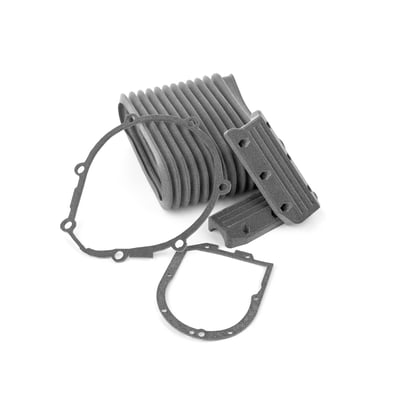
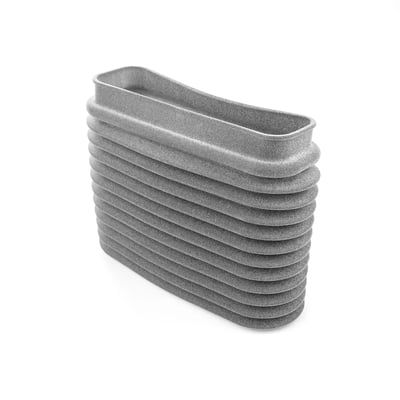
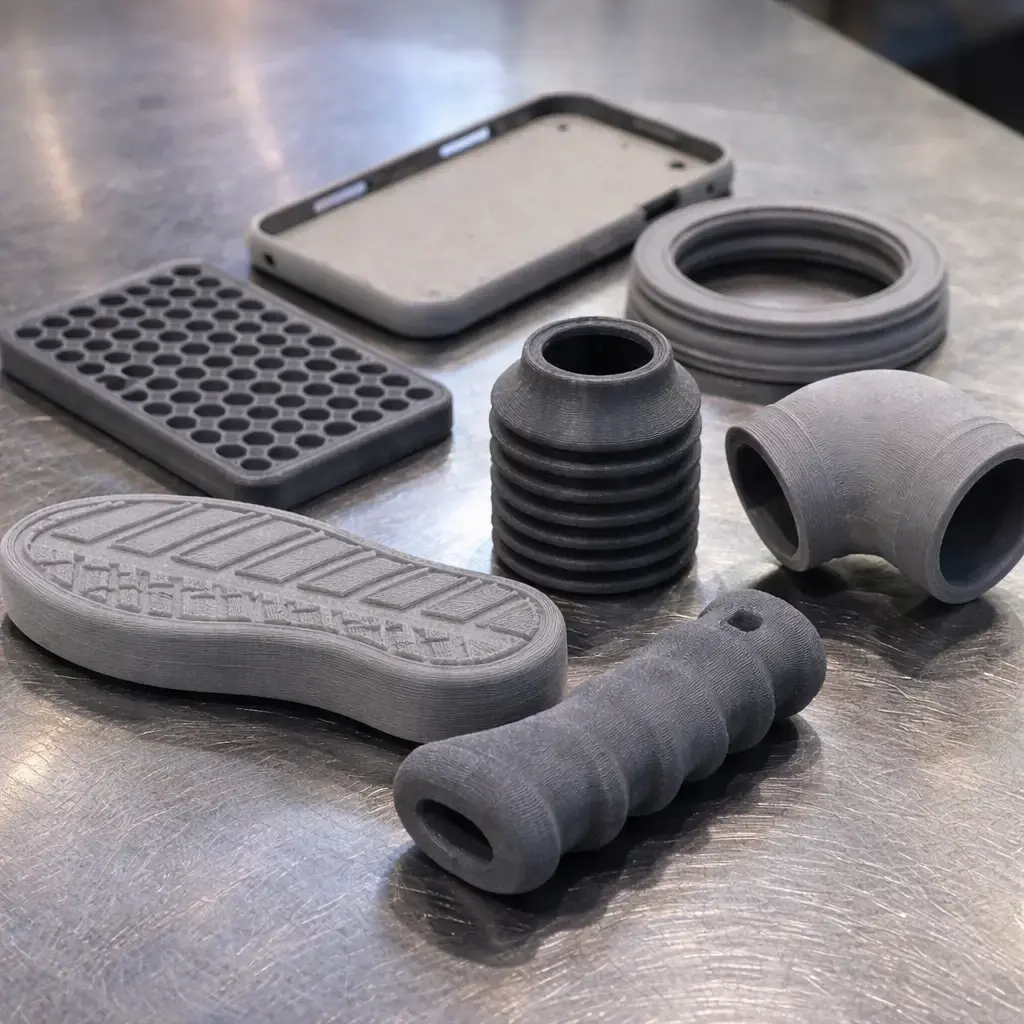
TPEs are also used in MJF and FDM 3D printing, especially when flexible parts are required.
Advantages
- high flexibility
- good impact resistance
- vibration absorption
In many cases, TPU - a variant within the TPE family - is preferred due to its greater stability during printing.
Advantages of TPEs over traditional rubber
TPEs are gradually replacing some vulcanised rubbers because they offer:
- simpler production processes
- recyclability
- reduced waste
- overmoulding capability
- lower production costs
Conclusions
TPE is an extremely versatile material that combines the flexibility of rubber with the processability of thermoplastic polymers.
Thanks to its elasticity, durability and recyclability, it is widely used across numerous industrial sectors and everyday products.
With the evolution of manufacturing processes and 3D printing, TPEs will continue to play an increasingly important role in the design of flexible and functional components.
UPLOAD YOUR FILE AND MANUFACTURE YOUR TPU PROJECT
FAQ

 Weerg staff: Sep 30, 2026