Skip to the main content.

Weerg Guides

The Weerg Blog collects up-to-date articles on 3D Printing and CNC Machining.

SUBSCIBE TO OUR NEWSLETTER

3D Printing

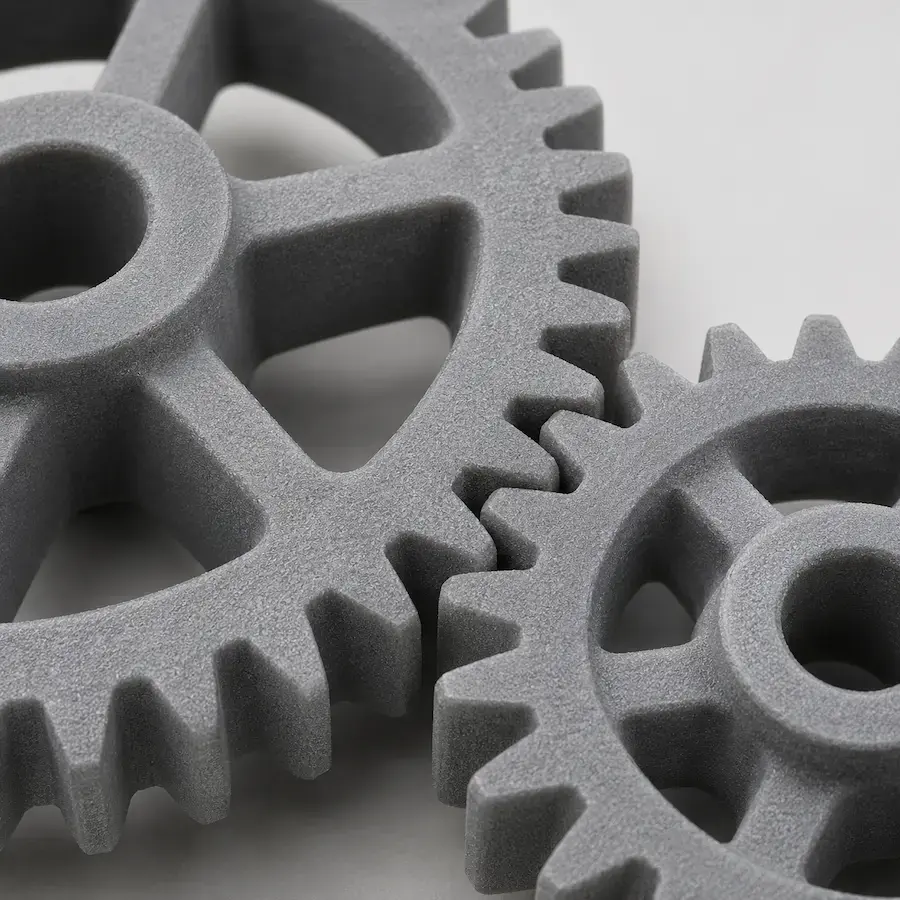
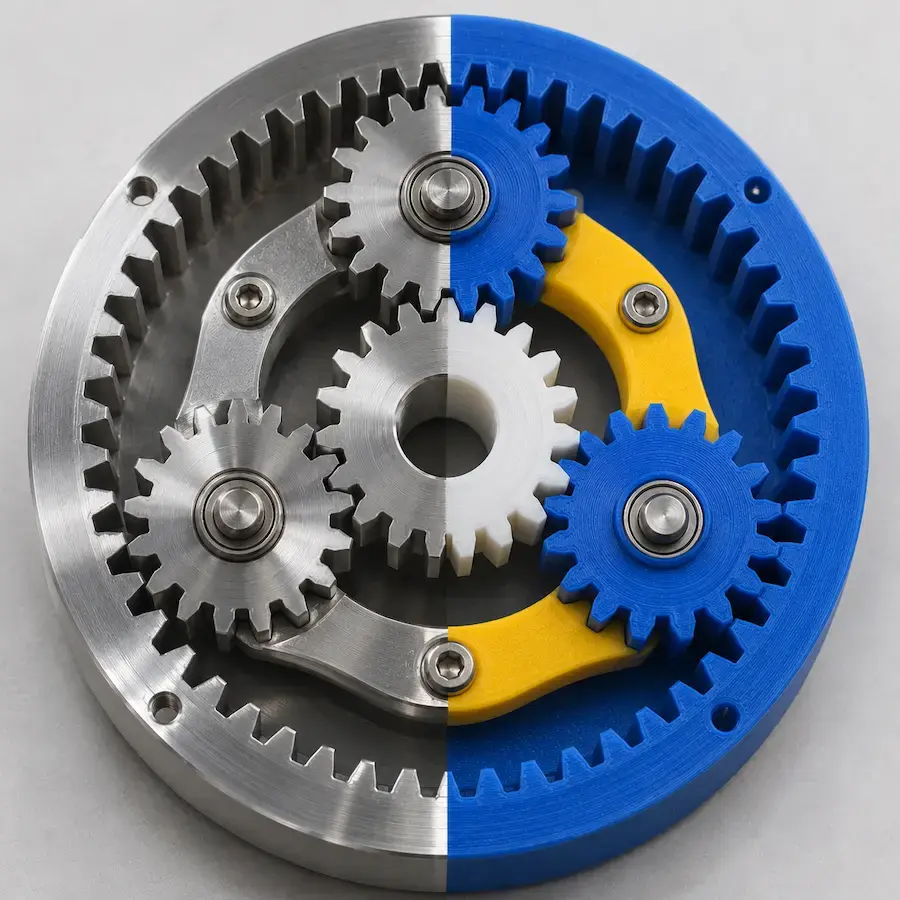
3D-printed PA12 gears

6 min read

3D Printed Gears: Materials, Tolerances and Design Tips

3D-printed gears are today a concrete solution for producing functional prototypes, small batches, custom spare parts and components for robotics and automation. This technology makes it possible to produce gears and entire gear trains in a few days, without moulds and with geometries that are...
Read More

6 min read

Designing an epicyclic gear train: a technical guide

The epicyclic gear train, also known as a planetary gear train, is a compact transmission that enables high reduction ratios, significant torque and configurations that are difficult to achieve with an ordinary gear train. It is used in automatic transmissions, industrial reduction gears, geared...

Read More
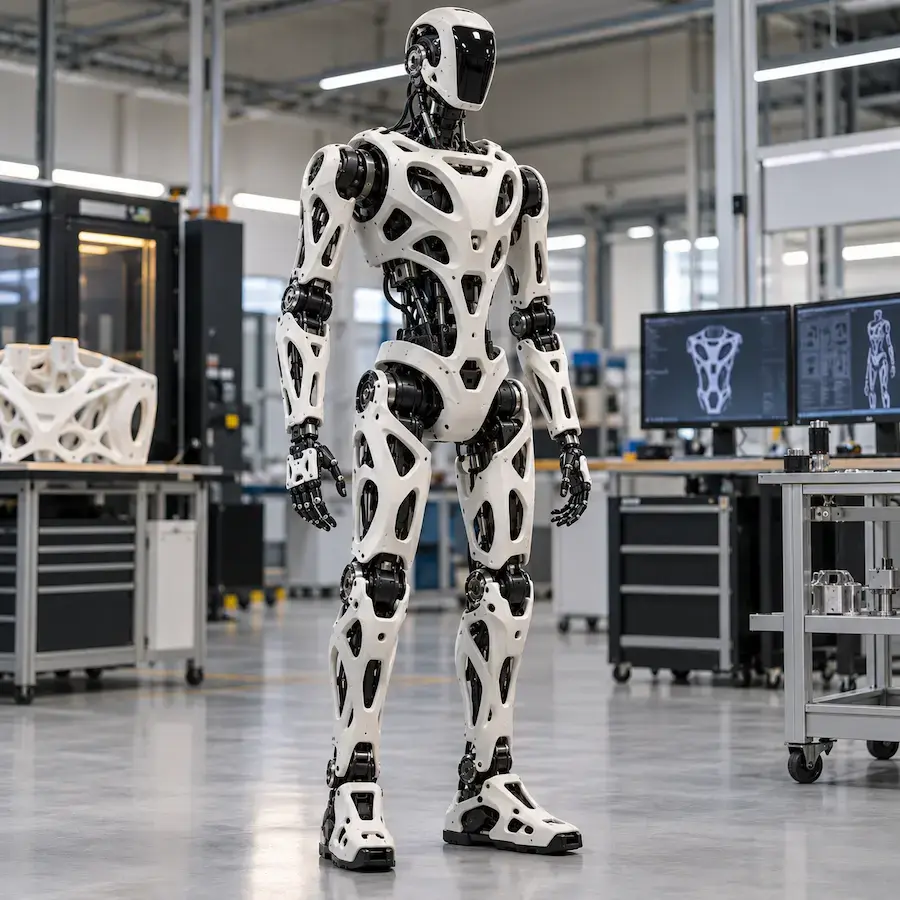
3D-Printed Humanoid Robot Exoskeleton

6 min read

Bionics and humanoid robots: components in 3D printing, CNC and laser

Bionics, the discipline that develops technologies inspired by biological systems, is making important progress, from neurally controlled prostheses to exoskeletons, through to humanoid robots. These applications pose engineering challenges linked to the production of lightweight, strong and...

Read More
Comparison Between Functional and Aesthetic Prototypes

6 min read

Functional vs. Aesthetic Prototypes: Differences and Choice

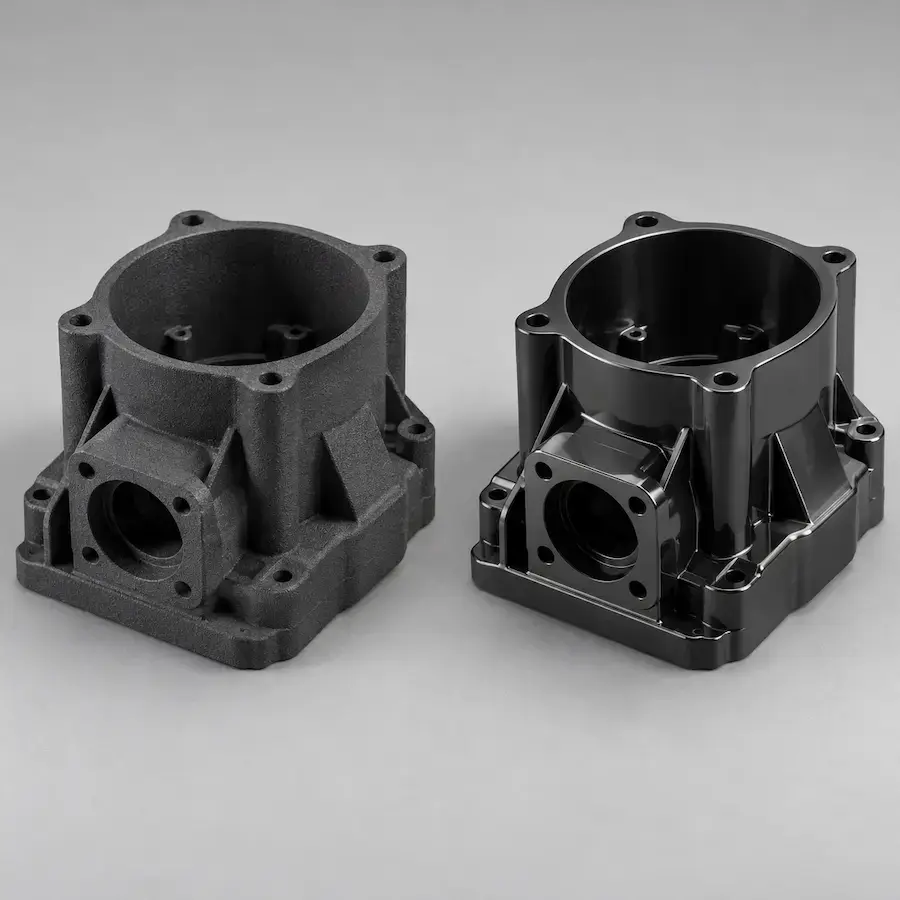
In the development of a new product, the prototype transforms an idea into a concrete object, making it possible to assess its characteristics before production. Depending on the objective, it can be functional, to verify strength, interlocks and mechanical behaviour, or aesthetic, to reproduce the...

Read More
FDM 3D printing orientation

7 min read

Orientation in FDM 3D Printing: How It Affects Strength, Finish, Cost

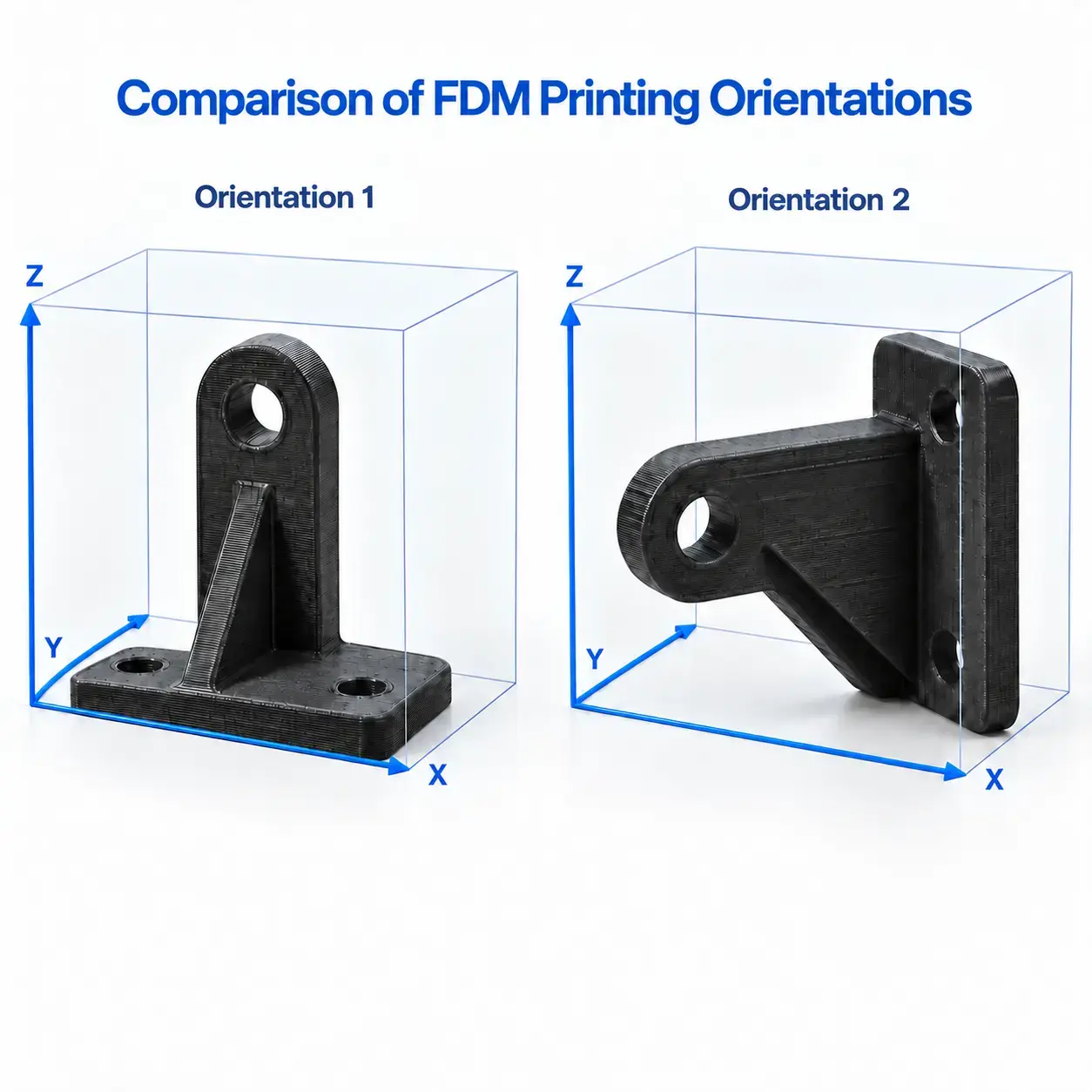
In FDM 3D printing (Fused Deposition Modeling), the same part, made with the same material and on the same machine, can be strong or brittle, smooth or rough, cheap or costly according to its orientation in the print volume. Orientation is therefore not a simple process parameter, but a design...

Read More

9 min read

3D-Printed Interlocking Parts: Design Guide 2026

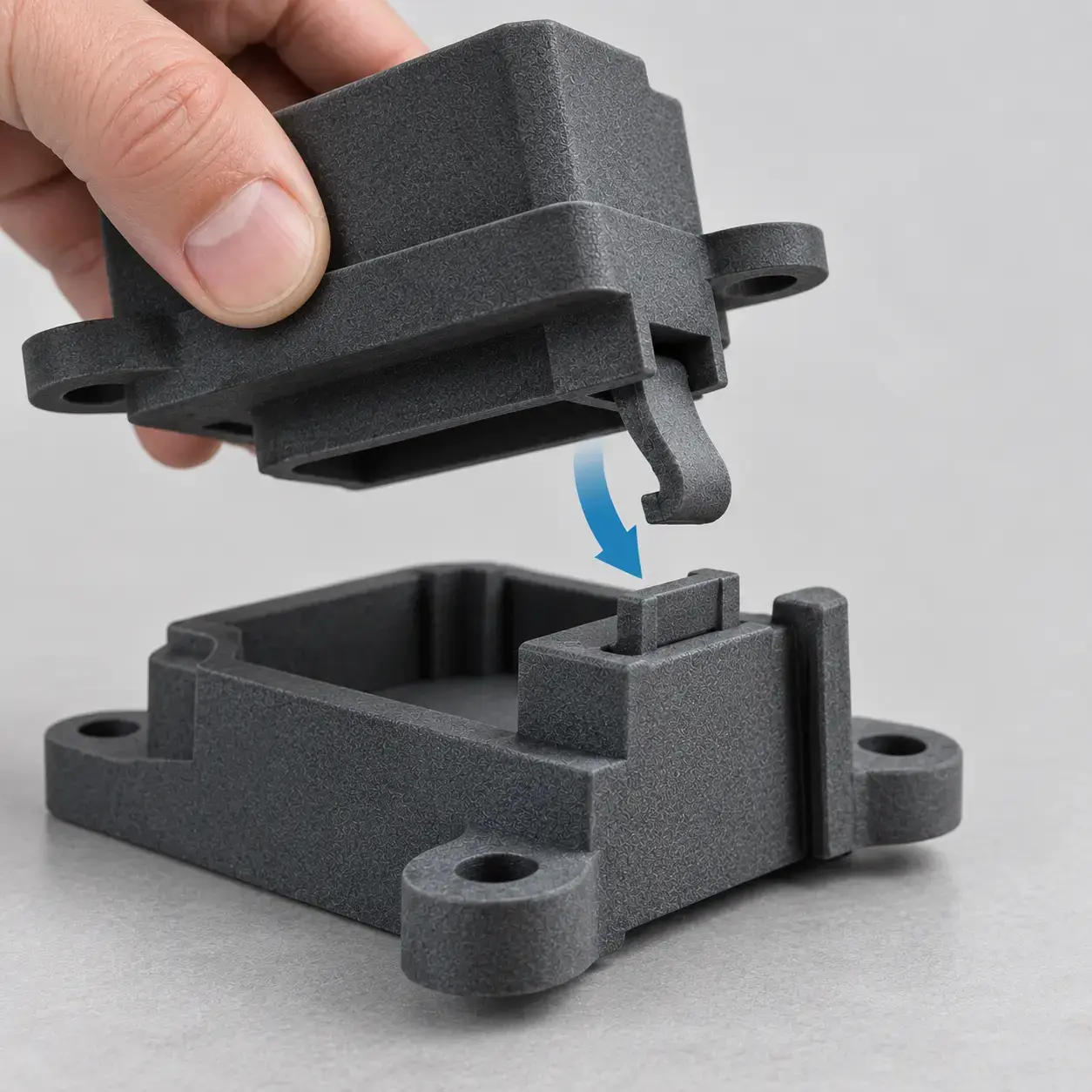
One of the least exploited advantages of 3D printing is the possibility of eliminating screws, glues and other fastening elements, integrating the assembly directly into the geometry of the part. Interlocking parts such as snap-fits, snap joints, dovetail joints and living hinges make it possible...

Read More
3D-printed components for logistics and autonomous mobility: cargo compartments, fairings, sensor mounts

7 min read

Technical parts for logistics and autonomous mobility systems

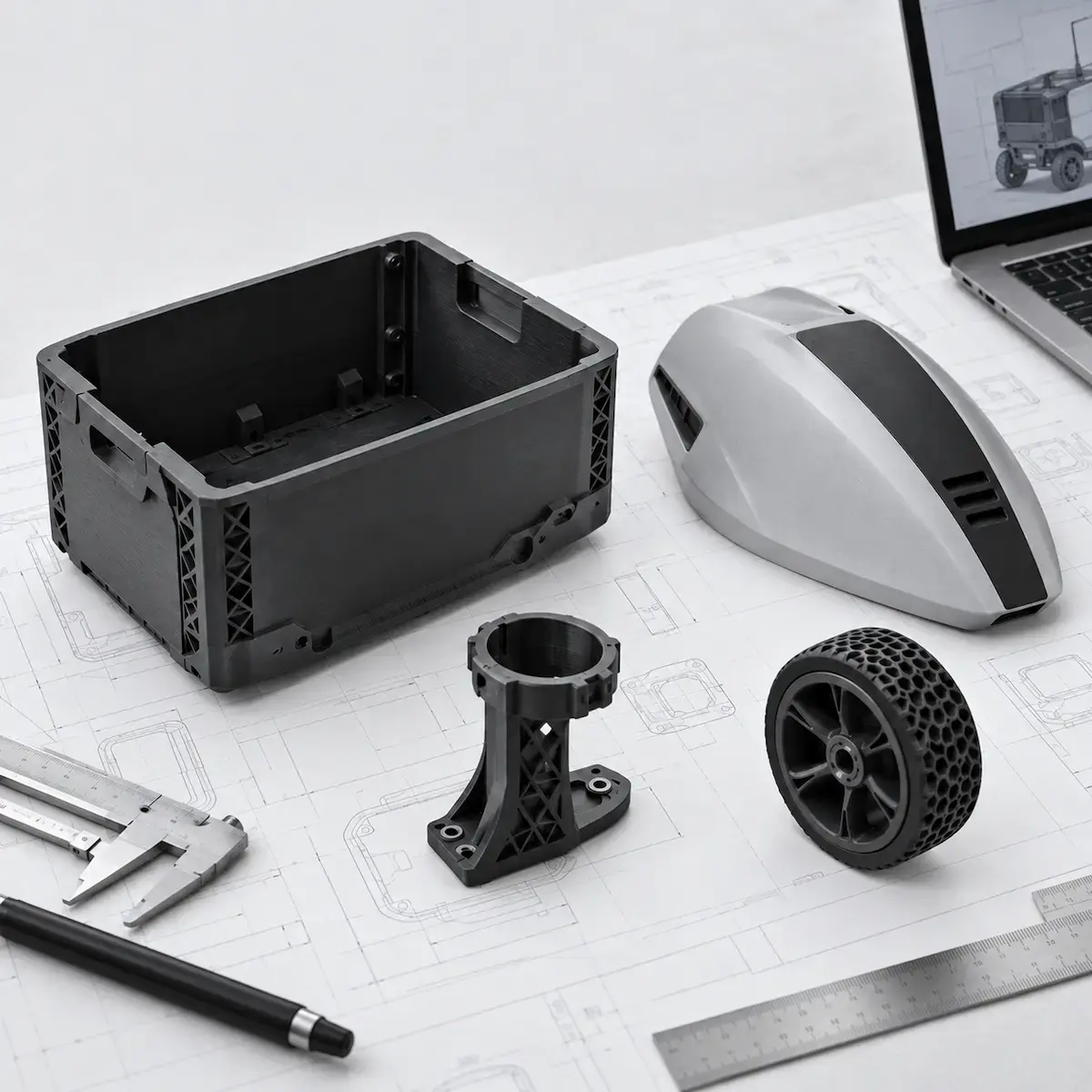
Autonomous logistics is one of the fastest-growing industrial sectors: AGVs, AMRs, last-mile robots and drones require numerous custom technical components hard to find off the shelf, such as load compartments, fairings, sensor mounts and optimised structural frames.

Industrial 3D printing makes it...

Read More
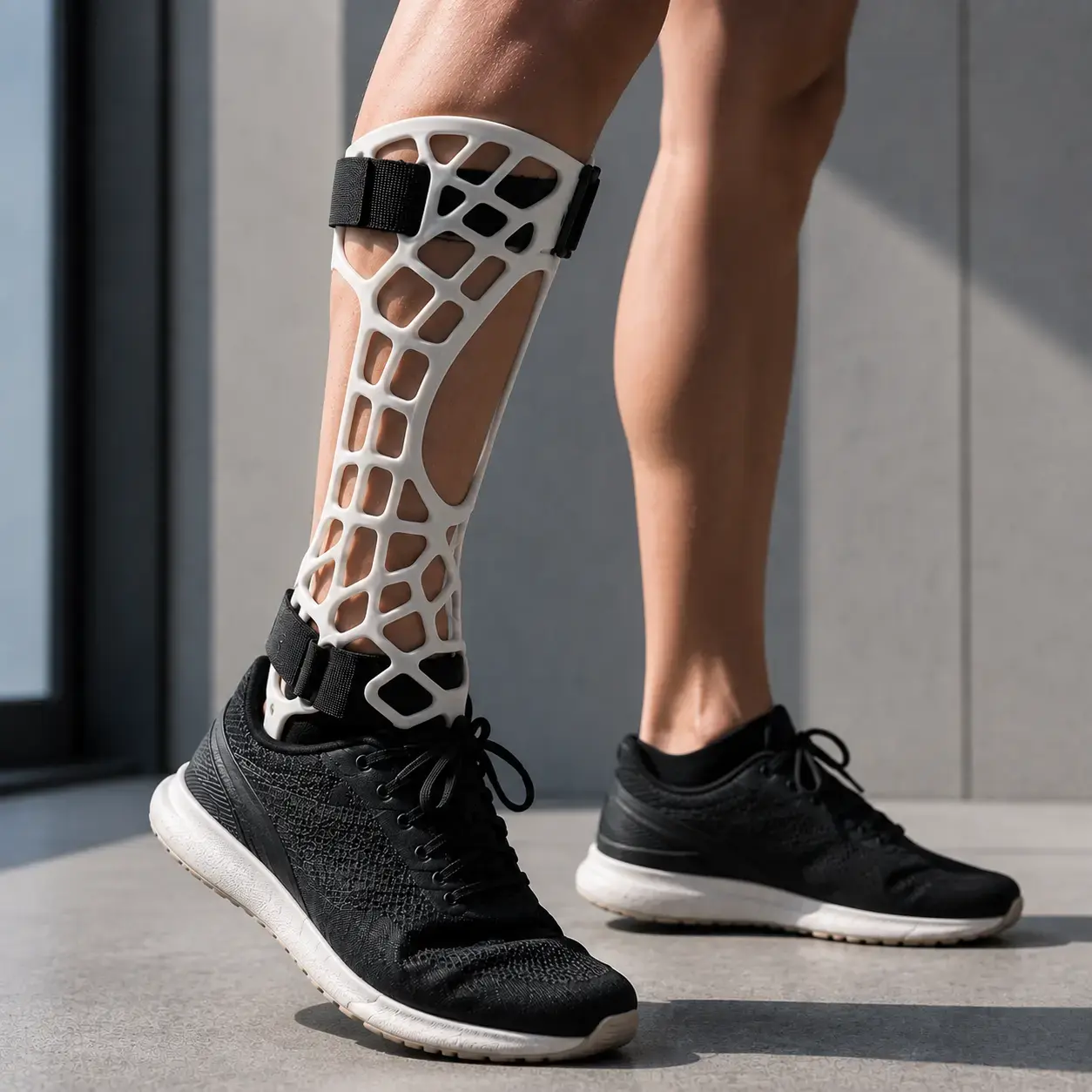
Custom 3D-printed orthosis with a PA12 nylon lattice structure

7 min read

Custom 3D printed orthoses, braces and insoles: advantages and process

Every patient has a different anatomy, and every orthosis, brace or insole should fit perfectly. Traditional orthopaedics has always known this, but until a few years ago, personalising meant resorting to plaster casts, foam models, manual working, long times and results heavily tied to the...

Read More
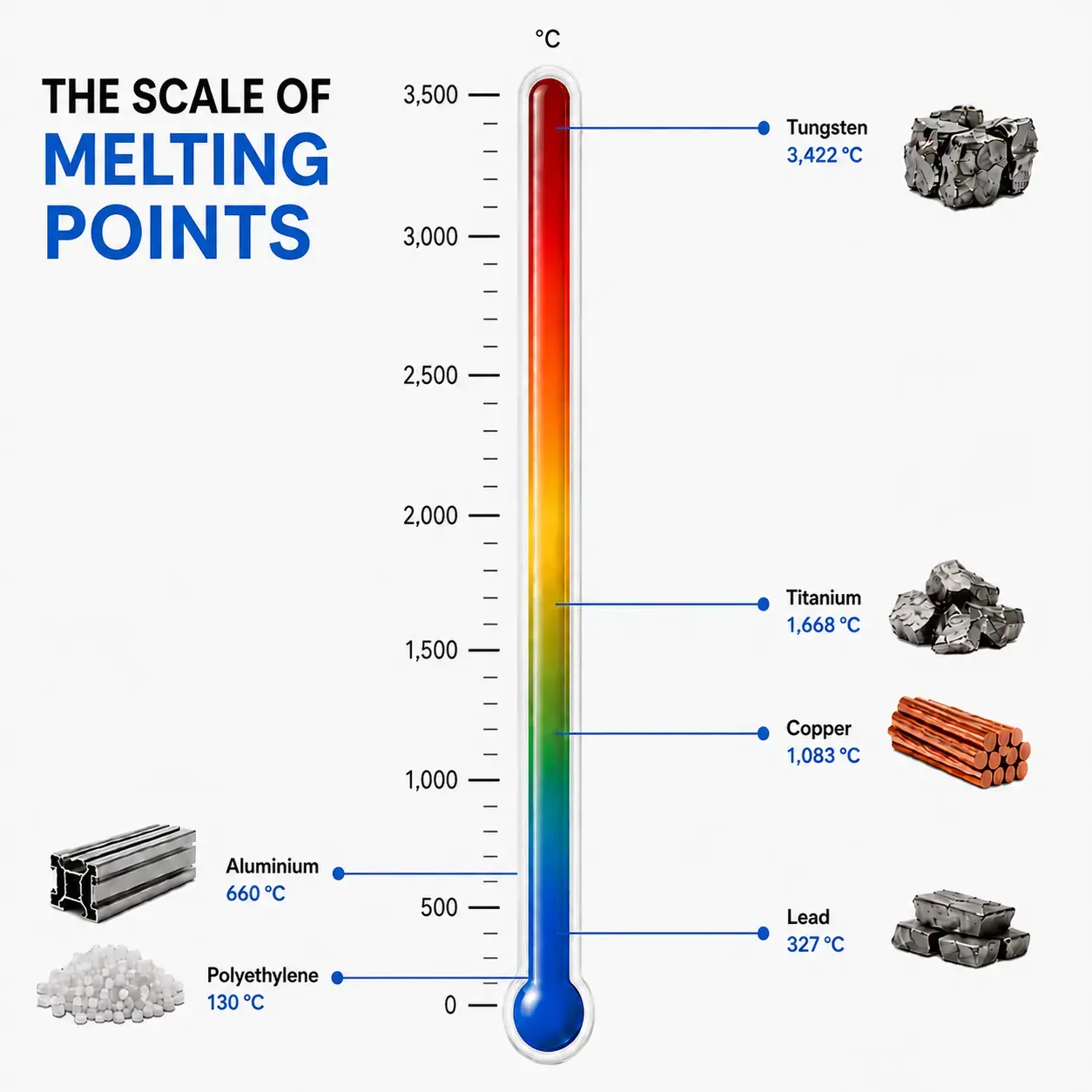
Melting Point Scale

7 min read

Melting point: what it is, how it's measured and why it matters

The melting point is one of the most consulted properties in the choice of a material, but also one of the most misunderstood. It's often confused with the maximum operating temperature or with softening. Furthermore, different parameters are sometimes compared, such as the melting point of metals...

Read More
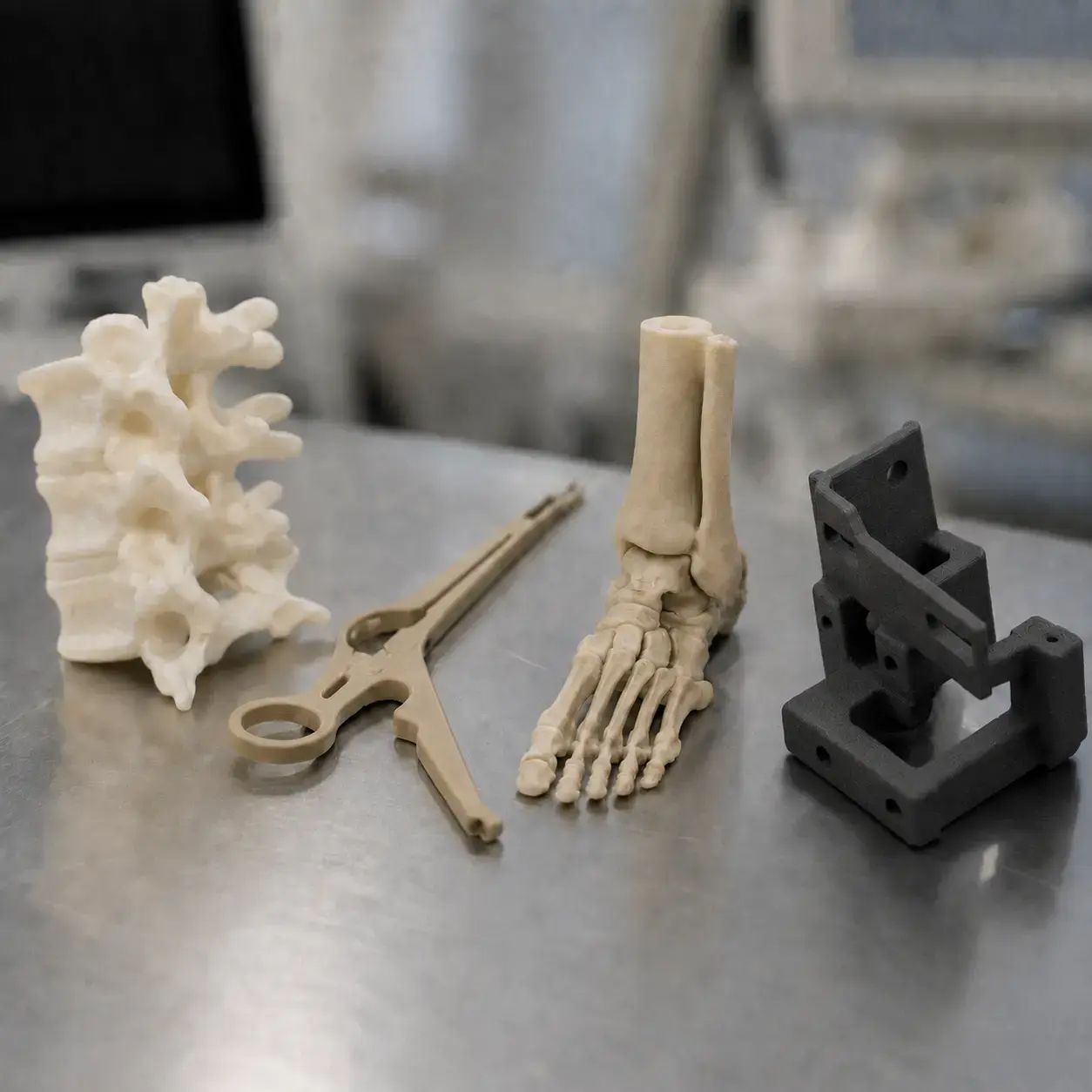
Comparison of Nylon PA12, Medical-Grade ABS, PEEK, and Biocompatible Resin for 3D-Printed Medical Devices

7 min read

How to choose the material for your 3D printed medical device

PA12 nylon, Medical ABS, PEEK or resin? For those developing a 3D printed medical device, it's the question that immediately follows the one about geometry: which material guarantees biocompatibility, resists the intended sterilisation method, offers the necessary mechanical properties and remains...

Read More