Skip to the main content.

Weerg Guides

The Weerg Blog collects up-to-date articles on 3D Printing and CNC Machining.

SUBSCIBE TO OUR NEWSLETTER

CNC machining

6 min read

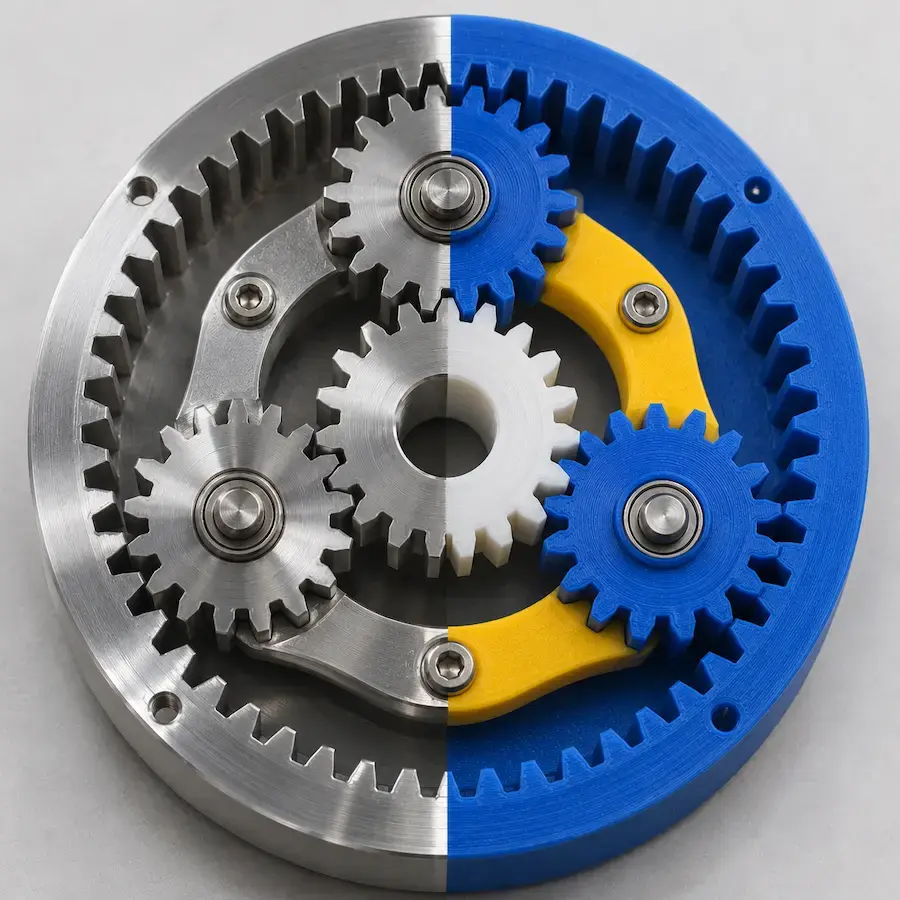
Designing an epicyclic gear train: a technical guide

The epicyclic gear train, also known as a planetary gear train, is a compact transmission that enables high reduction ratios, significant torque and configurations that are difficult to achieve with an ordinary gear train. It is used in automatic transmissions, industrial reduction gears, geared...
Read More
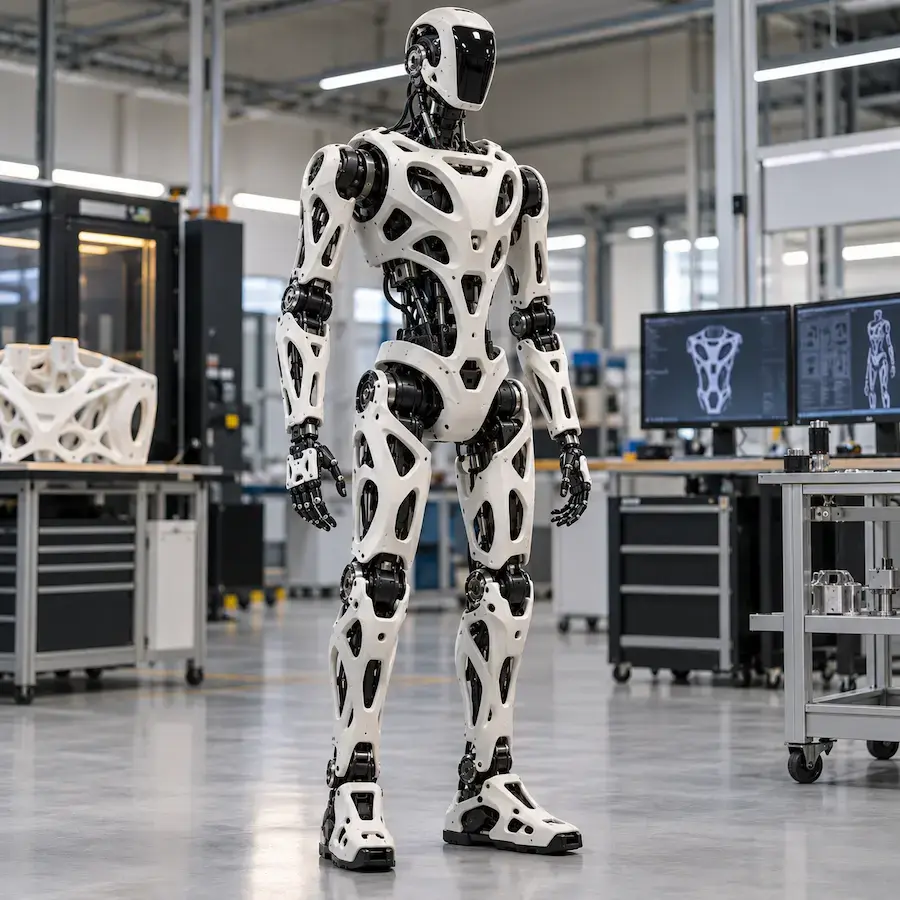
3D-Printed Humanoid Robot Exoskeleton

6 min read

Bionics and humanoid robots: components in 3D printing, CNC and laser

Bionics, the discipline that develops technologies inspired by biological systems, is making important progress, from neurally controlled prostheses to exoskeletons, through to humanoid robots. These applications pose engineering challenges linked to the production of lightweight, strong and...

Read More
Comparison Between Functional and Aesthetic Prototypes

6 min read

Functional vs. Aesthetic Prototypes: Differences and Choice

In the development of a new product, the prototype transforms an idea into a concrete object, making it possible to assess its characteristics before production. Depending on the objective, it can be functional, to verify strength, interlocks and mechanical behaviour, or aesthetic, to reproduce the...

Read More
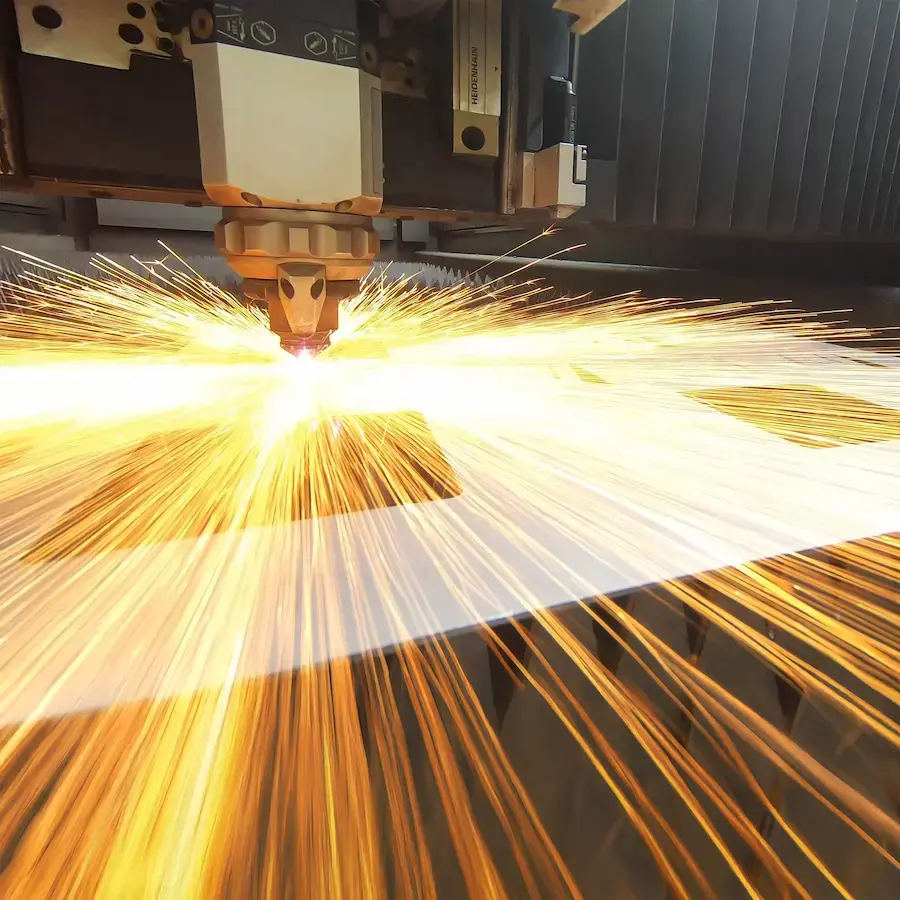
Close-up of a laser-cut sheet of metal

7 min read

How laser cutting works, costs and materials

Laser cutting is one of the most widespread and efficient production technologies for transforming a metal sheet into a finished component. A concentrated beam of light cuts the metal with precision and speed, without mechanical contact, following the profiles defined in a digital file.

For...

Read More
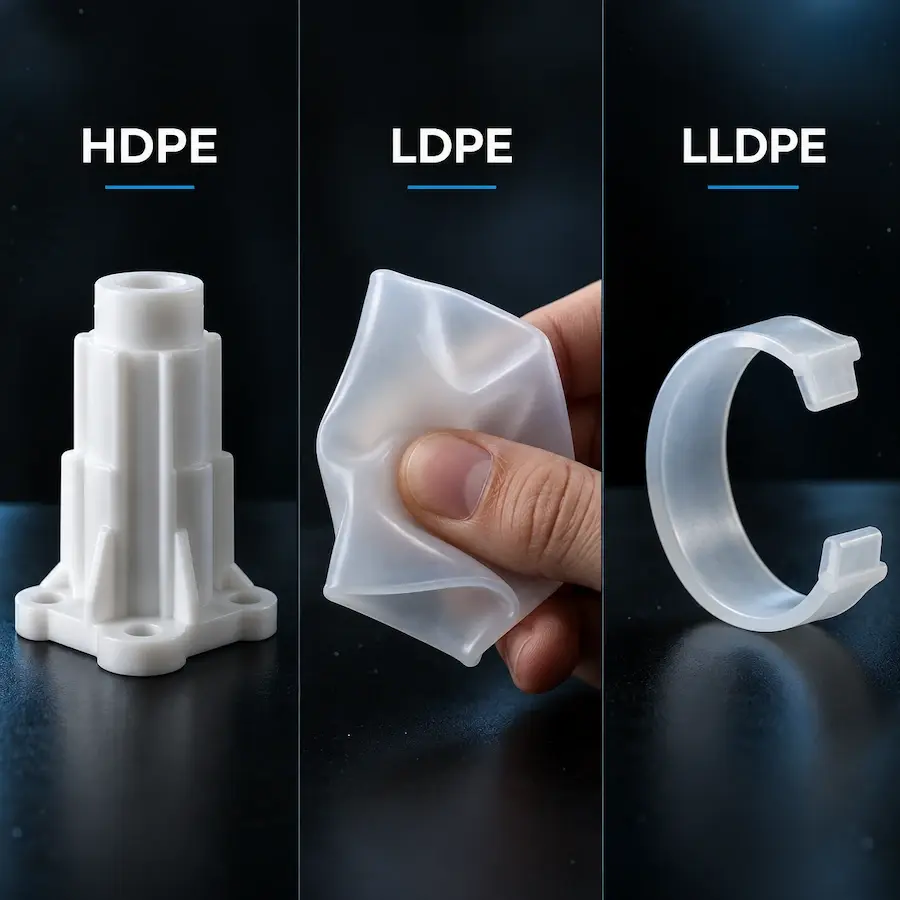
A comparison of HDPE, LDPE, and LLDPE using realistic samples that highlight the different stiffness and flexibility characteristics of the three materials.

8 min read

Which type of Polyethylene (PE) to choose

Polyethylene (PE) is the most widely produced polymer in the world: from grocery bags to gas pipes, from industrial tanks to hip replacements, this family of materials covers an extremely wide range of applications. Its strength lies in its versatility: by modifying the molecular structure,...

Read More
A Comparison of Ductility and Malleability in Metals

9 min read

Ductility and malleability of metals: what they are and differences

Ductility is the ability of a material to deform plastically under tension without breaking. Malleability is the ability to deform plastically under compression without breaking.

Ductility and malleability are two terms often used as synonyms. In reality they describe two distinct behaviours of the...

Read More
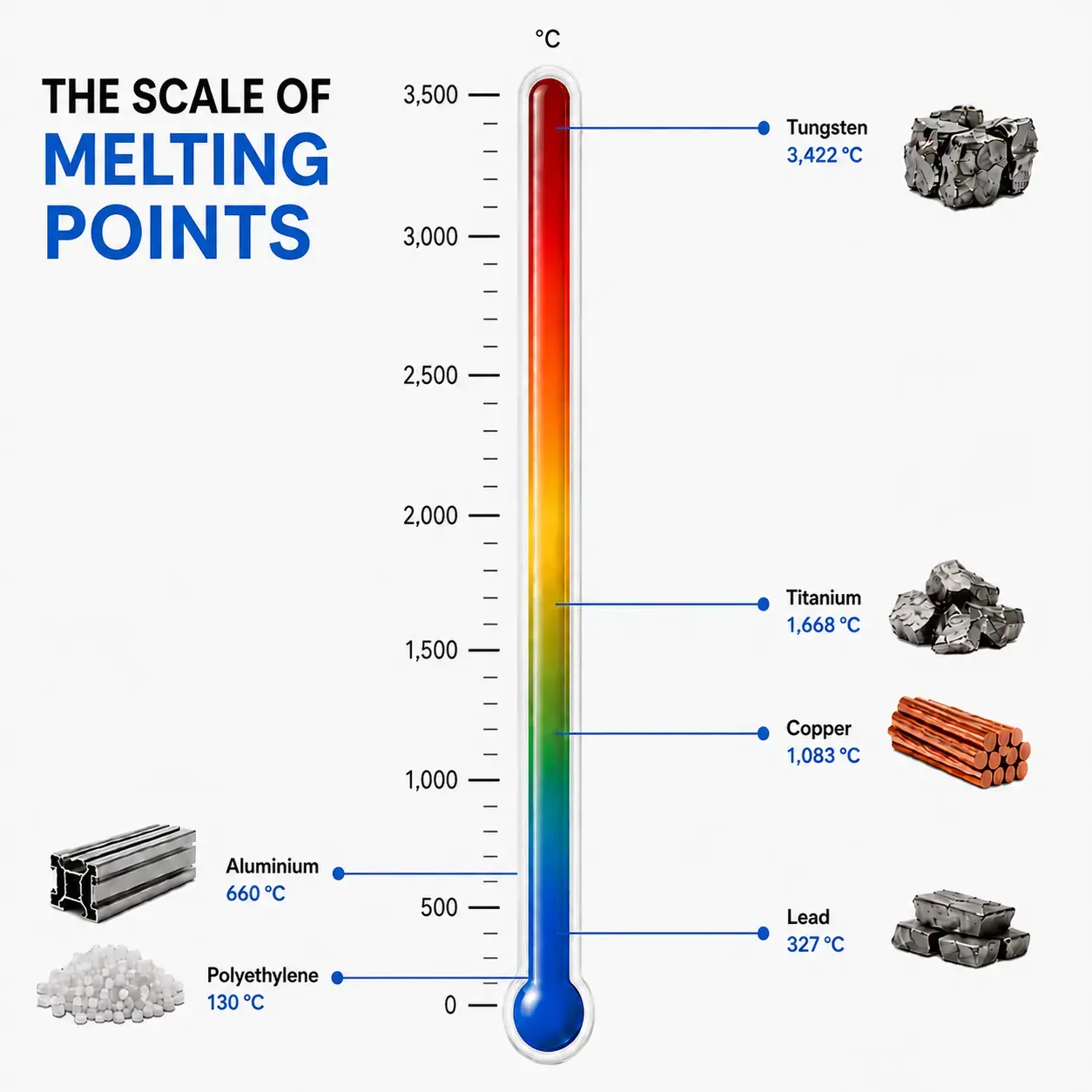
Melting Point Scale

7 min read

Melting point: what it is, how it's measured and why it matters

The melting point is one of the most consulted properties in the choice of a material, but also one of the most misunderstood. It's often confused with the maximum operating temperature or with softening. Furthermore, different parameters are sometimes compared, such as the melting point of metals...

Read More
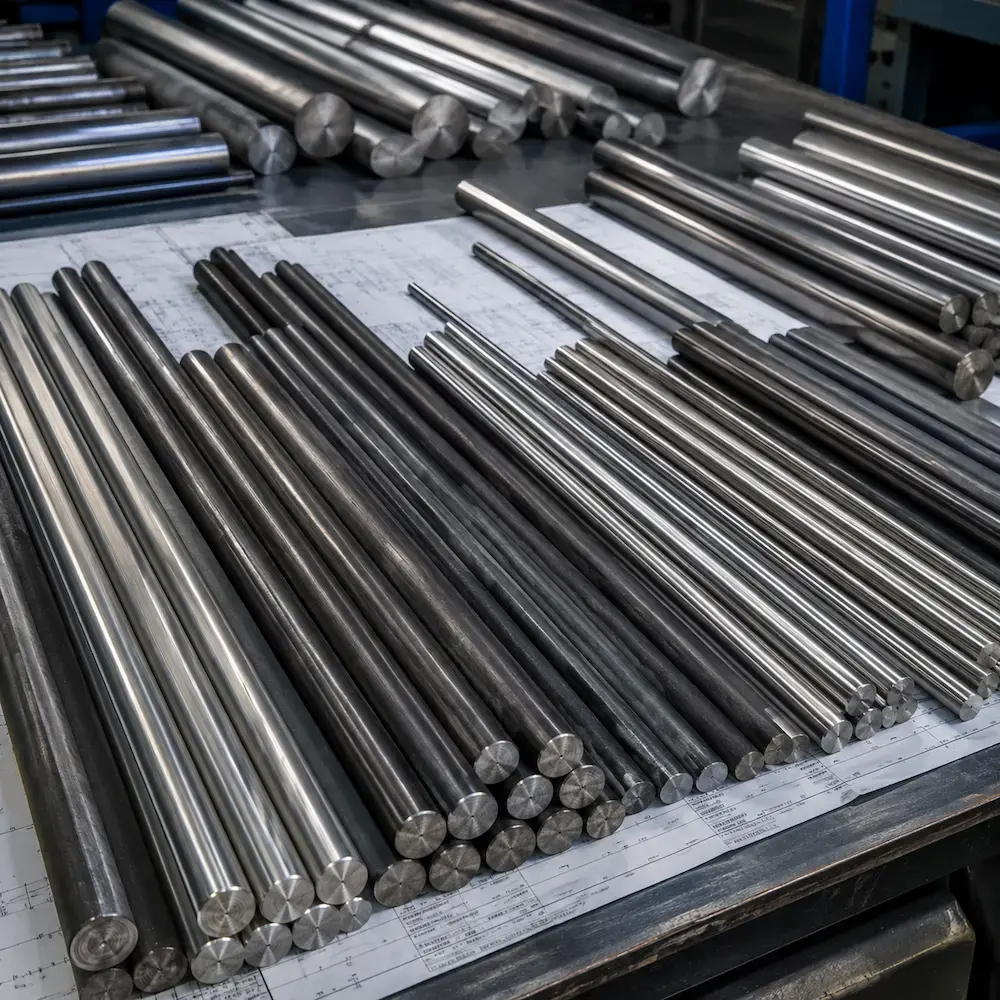
Various types of steel bars as raw material for CNC machining

6 min read

What Steel Is Made Of: Composition, Elements, and Types

What is steel made of? The short answer is: iron and carbon. The complete one opens up a whole world. Steel is a metal alloy composed of over 95% iron, but it's the remaining elements that determine its characteristics.

Understanding the composition of steel means understanding why an S355 behaves...

Read More
Elongation at break

7 min read

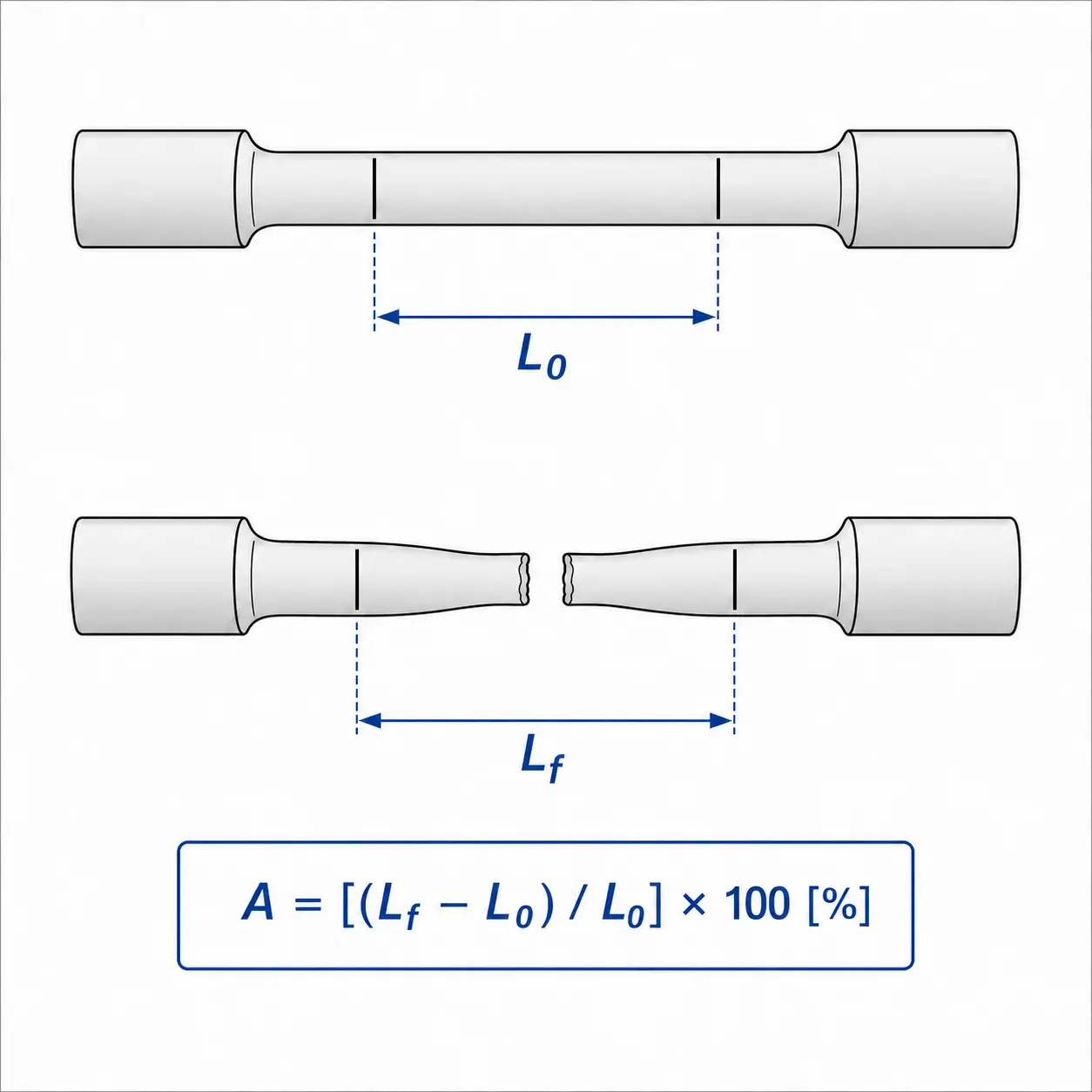
Elongation at break: what it is and why it matters in design

Elongation at break is one of the main parameters on material test certificates. It indicates how much a material deforms plastically before breaking under load and is a fundamental parameter for assessing its ductility. For the designer it's an essential piece of data: it makes it possible to...

Read More
Different Types of Polyamide

6 min read

Polyamide: Types, Properties and Industrial Applications

Polyamide, commercially known as nylon, is one of the most widely used engineering polymers in industry.

In this guide, we examine the main types of polyamide (PA6, PA66, PA11, PA12 and filled grades) their key properties and the practical criteria for selecting the right grade.

Read More